
If the last week in June is an indication of things to come then July 2026 is likely to go down in history as one of the hottest on record. This leaves travellers dreaming of a European summer with a dilemma, is travelling to Europe worth the risk of another extreme heat wave?
There are some cooler places to go in Europe in July, here are my three suggestions.
Usedom in Germany, an island in the Baltic sea accessible by rail with a long sandy beach and some historic architecture.
Asturias in Spain, where the mountains meet the sea. Combining walking, beaches and cities into one trip.
Riga in Latvia, with its UNESCO protected old town and many hours of daylight.
Usedom- Germany in July
The longest beachfront promenade in Europe isn’t, as you would expect, in France, Spain or Italy. It is on the island of Usedom on the Baltic coast of Germany.
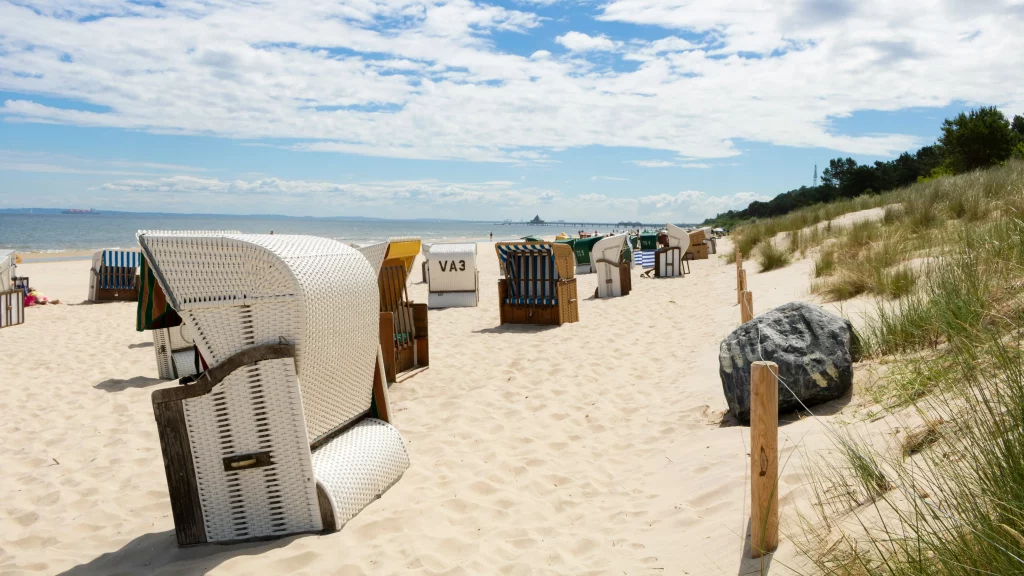
Usedom has been a popular tourist destination since the 19th century. Once a favourite of the Imperial family, the main towns are referred to as Die Kaiserbäder or Emperors Baths. The promenade stretches from Bansin to the North, through Heringsdorf, and Ahlbeck (all three port the prefix of Seebad – or Sea Bath) and on to the Border with Poland and the Town of Swinoujscie.
Each town has its own character, but all retain the elegant feel of a 19th century resort. As befitting a European seaside resort of that era each boasts a sea pier. The longest is in Heringsdorf, which stretches 508 m out into the Baltic sea, but it isn’t the oldest as it was finally rebuilt in 1995 following a fire in 1958.
The oldest pier is in Ahlbeck. Built in 1882 it is the oldest original pier in Germany. It is known by many Germans as the location for the final scene in the popular film Pappa ante portas.
The 40km long sandy beach, the longest in Germany, is the main draw. Being on the Baltic coast protects it somewhat from the soaring heat seen elsewhere in Europe thanks to climate change, but does mean that it tends towards the chilly. To provide from the sometimes biting winds, beach chairs (called Strandkorb) with a built in wind shield replace the sun loungers and parasols seen on the southern European beaches. These can be rented out for around 12€ a day. The good spots are sought after so it is worth going early in the morning if you want to stay all day.
For the active holiday maker there are 200km of cycle routes which criss cross the island. Paddle boarding and windsurfing are popular and there are beach volleyball pitches all along the beach.
Much of the food in the area comes from the sea, and as smoking was the traditional way of preserving the catch, smoked fish dishes are very popular. There are many stalls where you can buy a fish sandwich (or Fischbrötchen) or you could choose to sit down at one of the seafront restaurants.
Uwe’s Fischerhütte in Ahlbeck has been serving freshly caught fish for 6 generations. The interior has been recently renovated, or you can sit on the terrace with a view of the beach. It is a very popular spot so you do need to reserve and the menu is only available in German.
Where to stay in Usedom
The Strandhotel Ostseeblick perches above the Heringsdorf beach. This 4-star property is well ranked for its delicious food (scoring 14 in the Gault Millau guide, and the newly built spa won the Spa Star Award. Rooms with a seaview in July start at 252€.
Getting to Usedom
The Island is joined to the mainland by 2 bridges on the German side, the Zecheriner Brücke and the Peenebrücke as well as a tunnel on the Polish side. The bridges open, to a schedule, several times a day to let ships pass and timing your arrival to avoid openings will help avoid delays.
In summer there is a direct train link from Berlin, taking less than 3 hours. This is a small train which has taken Berliners north to Usedom since the 19th century, no doubt helping secure the reputation of the island as Berlin’s Bathtub.
You can also fly into the local Heringsdorf Airport from Frankfurt, Munich, Zurich or Vienna.
Asturias in July
In the north of Spain, where the mountains of Picos de Europa meet the Atlantic ocean in the Bay of Biscay, sits the Principality of Asturias. This northern part of Spain is mostly spared the extreme heat of the south and enjoys summer temperatures of around 24C
The coastline is wild and dramatic with cliffs and rock formations. There are more than 200 beaches along the coastline, from small rugged coves to large urban beaches. Some of them have great conditions for diving and surfing, others are blue flag beaches perfect for families.
The urban beach of Gijon, the largest city in the region, is a magnificent beach of soft golden sand. It is, along with the harbour, the centre point of life in this vibrant city. Cider and tapas bars, and the pintxos bars that have crossed the border from the Basque Country, fill the city.
The regional Capital of Oviedo has a somewhat different feel about it. It was founded in the 9th century and still has an old-world soul. The pre-romanesque architecture predates the Romanesque and gothic styles found elsewhere in Europe.
The advantage of a trip to this area is that you can visit both of the cities as well as other beaches on the coastline, but if the temperature does start to rise, or you want to stretch you legs, then you can get out into the mountains.
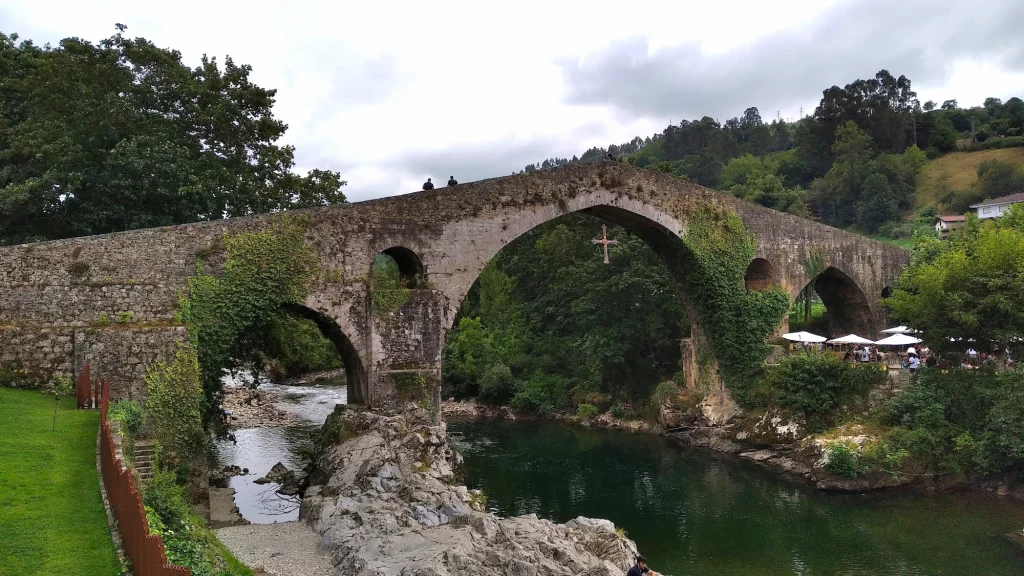
An hour from Oviedo is the beautiful town of Cangas de Onis. This is considered to be the first capital of Spain, though it it only held that title for just 52 years back in the 8th century. Cangas is a small market town in a valley sitting between the mountains and the sea. The medieval bridge crossing the Rio Sella is the most recognisable image of the town. This isn’t a resort town, it is a town of cider houses and cheese sellers, where evenings are quiet and peaceful.
The town acts as the gateway to the Picos de Europa National park. These mountains rise up in the Northern part of Spain and are so called because they were the first sign of Europe sailors would see on their way back from the Americas. Whilst they cannot compete in size or height with the Pyrenees or the Alps, they offer a dramatic landscape that is popular with walkers and climbers.
From Cangas de Onis you can reach the stunning Lakes of Covadonga and the awe-inspiring Basilica that sits beneath them. Or you can take the Funicular from Poncebos up to Bulnes, a tiny village in the mountains that time forgot.
Following the Rio Sella down to where is gives out to the Bay of Biscay takes you to the surprising town of Ribadesella. Tourists are drawn here for the UNESCO site of Tito Bustillo, a cave with paintings dating back 30,000 years. This is the Lascaux of northern Spain and has a visitor centre dedicated to cave art (note visits to the cave are limited and need to be reserved several weeks in advance).
But that is not the only surprising thing about Ribadesella the western promenade of the sea front, with a backdrop of the Picos de Europa, is lined with villas from the 19th and early 20th century, built in the Cuban colonian style. The town is the perfect location for anyone wanting to make the most of both the coast and the mountains in Asturias. As a fishing port the day’s catch can be eaten fresh at the towns many restaurants, where you can also experience the cider pouring rituals that it traditional in this part of Spain.
Where to stay in Asturias
Some of the villas in Ribadesella have been converted into Hotels, the most notable of which is the 4-star Hotel Villa Rosario. An outrageously grand looking Latin American styled building, the hotel offers rooms in the older part of the hotel, looking out to the sea, or larger rooms in the more modern annexe. The attached Michelin starred restaurant Ayalga, which offers diners local products and recipes of Asturian tradition prepared respectfully with the most innovative techniques. The highly regarded breakfast is served in the restaurant overlooking the Santa Marina Beach.
How to get to the Asturias
Once a relatively difficult part of Spain to reach, both Gijon and Oviedo are now linked to Madrid by high speed rail, which gets you to the coast in just over three and a half hours from the capital.
Bus services run between the towns, but to get the most of the wilder parts of the Asturias it would be better to hire a car.
Riga Latvia in July
City breaks in Europe in July and August can get very hot as well as very crowded. Compared to other comparable cities, such as Prague, Riga gets a fraction of the number of tourists, and the temperature remains pleasant through the summer months. In fact the evenings can still be on the chilly side so the capital of Latvia is perfect if you prefer to avoid the summer heat.
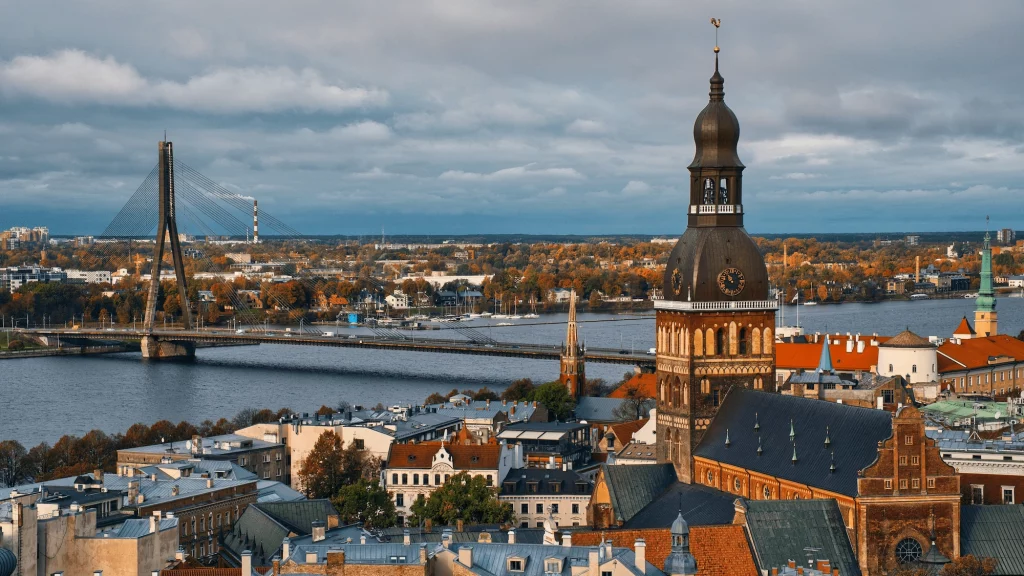
The city has a remarkable old town, with cobbled streets and fairytale looking houses, some dating back to the 15th century. You can get some magnificent views from the observation deck of St Peter’s Church. The Dome Cathedral is one of the most impressive buildings in the Old Town, and holds one of the most celebrated church organs in Europe. Throughout July you can attend concerts to hear this remarkable instrument.
A walk through the rather lovely Basteikalns park takes you to an area full of some stunning art nouveau style houses. Some of the best examples can be found on the emblematic Alberta iela, on the corner of which you will find the Art Nouveau Museum, which will give you a glimpse of what the buildings look like on the inside.
There is modern architecture in the city too. The National library building takes the form of a glass mountain, the design drawing on two Latvian folk tales referencing three horsemen rescuing a princess. The building was designed by Riga born architect Gunnar Birkerts who fled Latvia ahead of the advancing soviet army in 1943. This building is the pinnacle of his work and allowed him to connect back to his home country. The inside of the building is as spectacular as the outside as is the view from level 11 across the river to the Old Town.
The occupation of Latvia by the Soviets, and for a few years by the Nazis, is the subject of the Occupation Museum. The building was original constructed by the Soviets as a museum for the Riflemen and now holds exhibits showing what Latvia lost during the occupations. This is a museum that deserves to have time dedicated to it, and one shouldn’t expect to leave it unmoved.
There is a special reason to visit Riga in July 2026. Once every five years Riga hosts the Lavian School Youth Song and Dance Festival, which brings together thousands of young performers from across Latvia. Song and dance is an important part of the Latvian national identity and this is a joyful event. It can, however, result in increased hotel prices during the event which runs from 5-13 July?
Where to Stay in Riga
Neiburgs Hotel is a family run establishment housed in one of the oldest Art Nouveau buildings in Riga, right in the heart of the Old Town. The restaurant has featured in the Michelin guide for the past three years and serves authentic cuisine with a modern touch. It notably has vegetarian options which is not always the case in this part of Europe. The hotel has been redesigned as an aparthotel, so all rooms have kitchenettes and there are options for families. Rooms in July start from 185€
How to get to Riga
Riga is well served by the European low cost carrier Ryanair and Airlines such as Baltic air. There are also very good, reliable bus services from Tallin and Vilnius. There is also a train link from Vilnius.
Best places to go in Europe in July
Typically, a European summer conjures up images of Mediterranean resorts but climate change, and the recent heatwaves that have hit the continent mean that a new way of thinking is needed. These three options all deliver a memorable trip to Europe, whilst avoiding the excess heat. For now, at least, that also has the benefit of avoiding the excess summer crowds.
I am hoping to head to the Asturias, for some walking and some beach time and some of the delicious cider.
If you are planning your first trip to Europe then make sure your read How to plan a trip to Europe: the 3 essential first steps

If you need help with planning your trip then check out our services

If you have any questions about travel itineraries in Europe then drop us a line.  We are happy to help.

If you want more tips and ideas for visiting Europe then FOLLOW ME ON INSTAGRAM