
Despite living in France for over 20 years, I had never been to Lyon, until my recent trip. I now wonder why it took me so long.
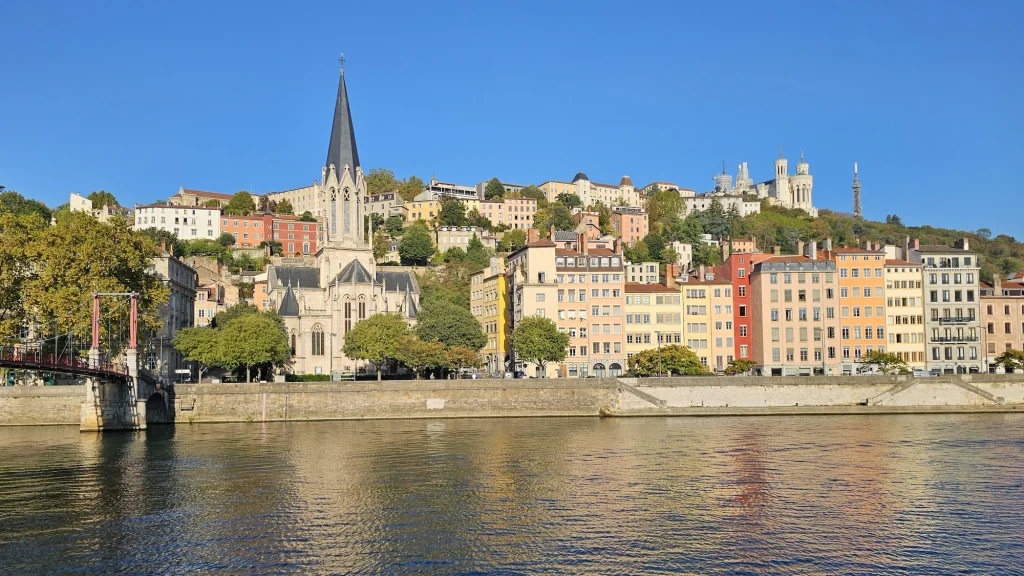
Lyon is a city that is quintessentially French. You couldn’t be anywhere but France. Many go because of its reputation for being the gastronomic capital, but it is an interesting city for many reasons. You can watch my video about my trip to Lyon here: . I thought it might be useful to go over some of the things I learnt about travelling to Lyon.
10 things I learnt about travelling to Lyon
1. It is best to stay on the Presqu’île or in Vieux Lyon.
The city is somewhat split into three, with the two rivers, the Rhône and the Saône, forming almost an island – the Presqu’île – in the middle. This is where much of the commerce, main buildings and restaurants are and is a good central location to stay. I stayed at the Grand Hotel des Terreaux.
The old town, or Vieux Lyon, is across the river Saône, and is very characterful. It would also be a good place to stay but is a relatively small area with a lot of tourists. It is the only place in Lyon where you see huge numbers of tourists, which is my main reason for not recommending it as a location to stay. It also doesn’t have a wide choice of hotels.
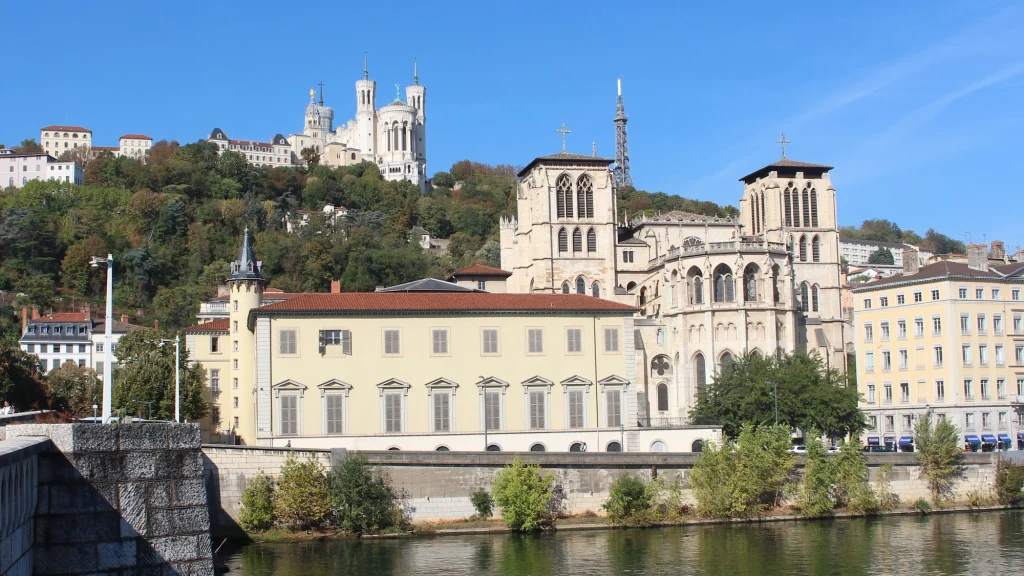
Fourvière seems like a tempting place to stay, with views over the city, the emblematic basilica and the Roman ruins, but in reality, it isn’t walking distance to anywhere (unless you enjoy walking up steep hills) and you are far better staying near the rivers and taking the funicular railway up the hill to visit the Basilica.
2. The Basilica is stunning and definitely worth the trip up the funicular
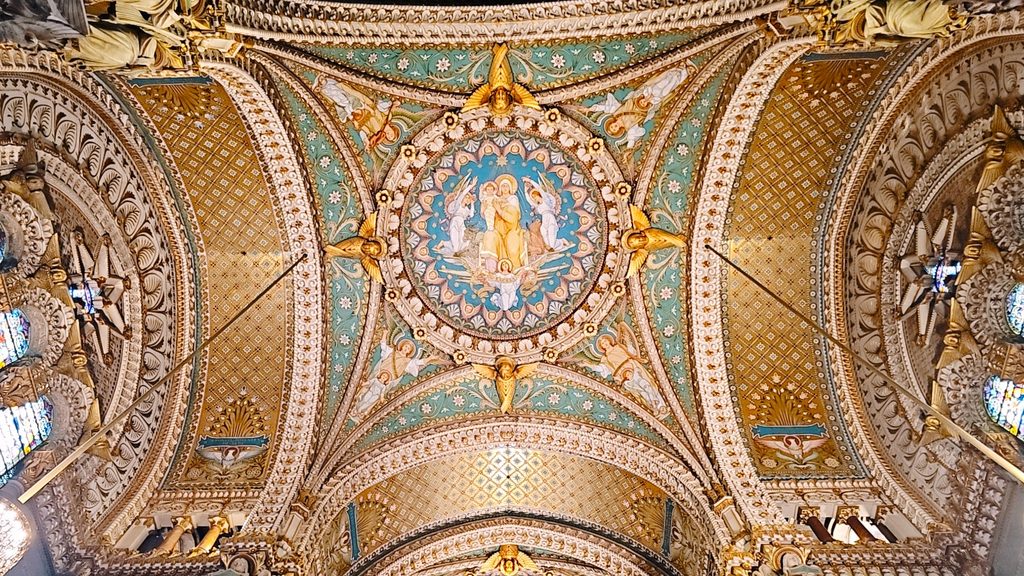
The Basilica Notre-Dame de Fourvière sits above the city like a beacon. It is a relatively new build compared to most European cathedrals; it was built between 1872 and 1884. It is amazingly colourful inside, nothing like the somewhat austere namesake in Paris. There are mosaics all over the walls and the ceiling, it is very beautiful, and definitely worth a visit. There is no entrance fee; it is free to enter. It is open daily from 7am to 8pm, though entrance is restricted during religious services.
You reach it by funicular from Vieux Lyon (€3.70 return fare – or included in the City Card)
3. The Lyon city card is useful and will save you money,
The city card includes access into most of the city’s museums, as well as all public transport. There are also added extras, such as a free walking tour and a free river cruise. It costs €29 for a 24 hour card, or €38 for 48 hours.
The one thing I found to be inconvenient however is that you need the physical card. Unlike other cities, such as Antwerp where I visited recently, the card can’t be used on the app alone; you have to pick up and use a physical card. The app works for museums but not for the buses, trams and metro. This means either making your way to the tourist office in the centre (but you can’t use the public transport for free until you have picked up your card), or going into the shopping mall (Westfield La Part-Dieu) near the train station. The desk at the shopping mall isn’t open until 9:30am and they are not a full tourist resource.
I found the card to be worth the money, and it was convenient to have the public transport included.
4. A food tour or a walking tour of the old town is great to get to know about the traboules, but you don’t need to do both.
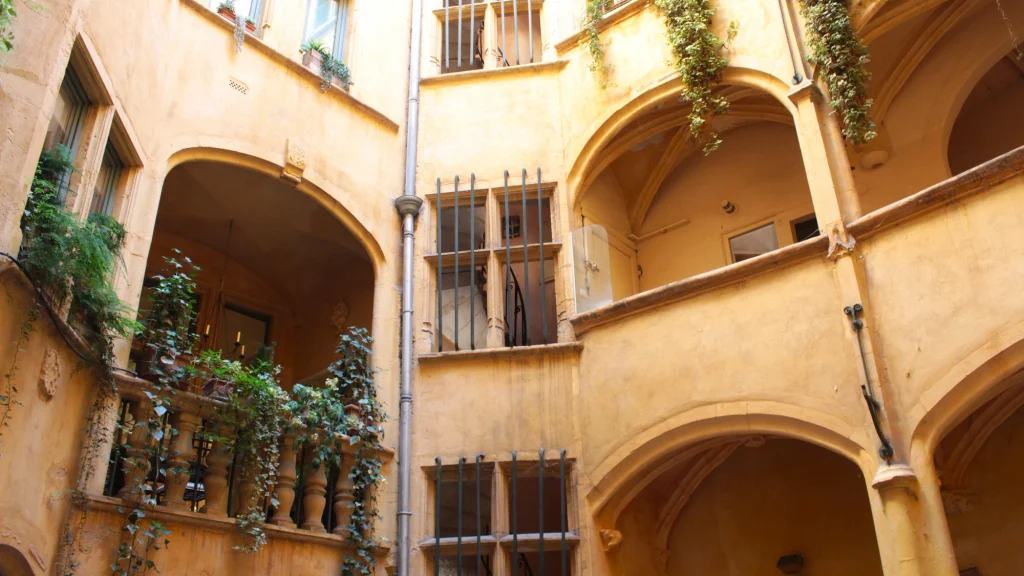
There is a walking tour included in the Lyon City card, I took the one which shows you around Vieux Lyon and its Traboules. These are passageways that go through residential buildings from one street to another. They are one of the peculiarities of Lyon. There are 500 or more of these Traboules across the city, but only a fraction are open to the public. As they are hidden behind doors they are not evident without taking a guided tour. I also took a food tour (see podcast episode) which was based in Vieux Lyon, and ended up going down many of the same Traboules, so if you are doing a food tour I would say you don’t need to do the walking tour.
The tour I took started in front of the Cathedral dedicated to Saint John the Baptist.
5. It’s not worth going out of your way to be at the cathedral when the clock chimes.
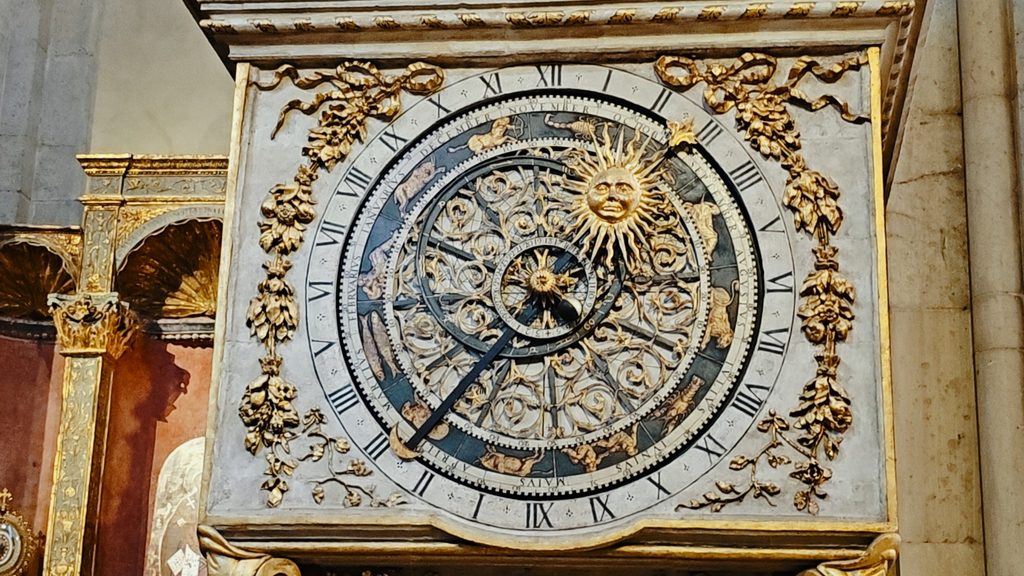
The cathedral is the home of one of the oldest astronomical clocks in Europe, dating back to 1379. It shows the date and the positions of the sun, moon and stars over Lyon. It’s the only one in France that still has its original mechanism. If you happen to be near the cathedral at the time when the clock will chime (it chimes four times a day, at noon, 2pm, 3pm and 4pm) then stay and listen, but it doesn’t last long and isn’t worth organising your day around it.
6. The Bouchon restaurants are more about the experience and filling you up than they are about delicious food.
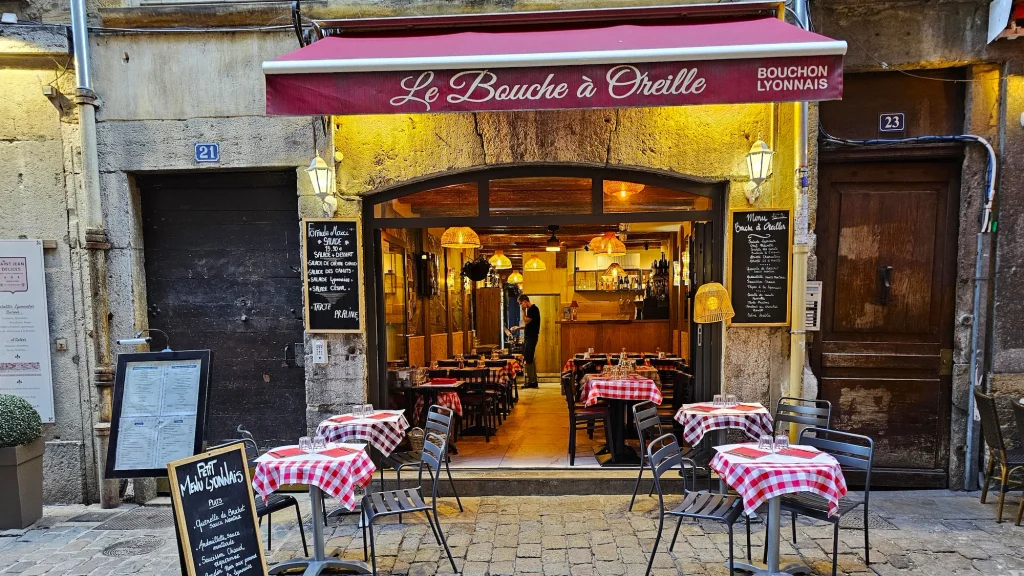
The Bouchons Lyonnais are the classic restaurants with the red and white checked tablecloths that you will see all over Lyon. They serve a very traditional style of French food, which can be quite difficult to elsewhere. Some of them have communal tables, most are very kitsch in their décor. I found that they were far more about the experience than they were about the quality of the food. That is not to say the food was bad, just that it wasn’t refined or delicious. The food is there to fill you up, rather than surprise and delight. Go for the experience, but if you would like really good food I recommend the Café Terroir. Their lunchtime menu is particularly good value at €32, which is a similar price to the Bouchons, but for a much higher quality of food.
7. The rue Mercière is mostly for tourists, but you can eat well and it has a great atmosphere.
There is one street on the Presqu’île where you will find a number of Bouchon restaurants, as well as many other restaurants and bars. It is a really great place to wander and eat in Lyon in the evening. I spoke to some locals who confirmed that most of the street is aimed at tourists, but that doesn’t mean you will eat badly. There are several good restaurants there. If you do want a Bouchon type restaurant try Le Mercière.
8. You will get better value, and better food at the covered market of Les Halles de Lyon Paul Bocuse than you will get in Vieux Lyon
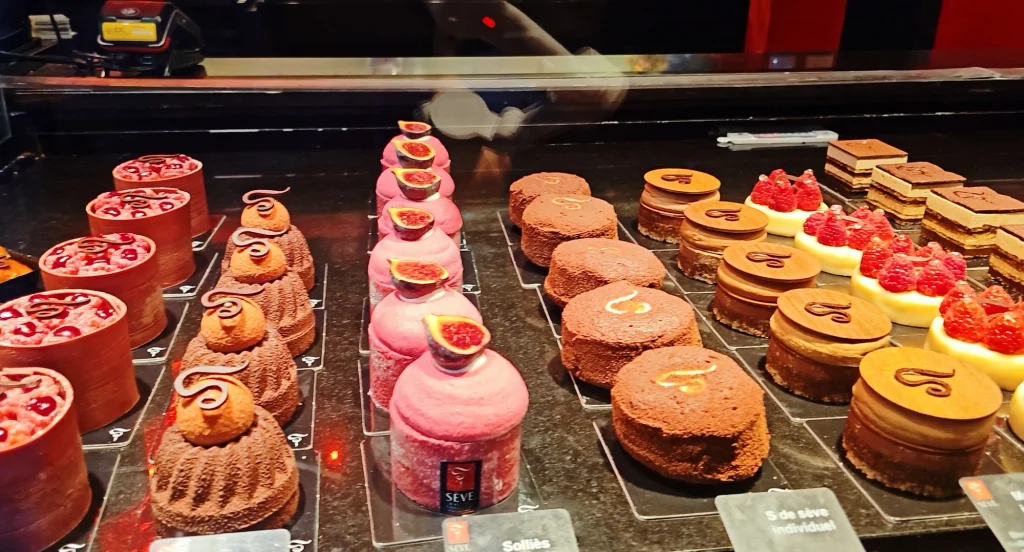
Lyon has a covered market dedicated to its most famous chef, the late Paul Bocuse. In some respects it is much like covered markets you will find throughout Europe, but this being Lyon the quality of the food is elevated to another level.
You will find many, mouth-wateringly beautiful, patisserie stands as well as seafood, a lot of cheese, charcuterie and even frogs’ legs.
There are numerous choices of restaurant within the market. I found the prices to be more reasonable than those that I saw in the old town, and the quality is excellent. The market is not too far from the train station, and has a bus stop right outside so is convenient for an arrival or departure day.
9. Silk is as important as, if not more important to Lyon than gastronomy.
The city was built on the silk trade, and the bouchon restaurants came about because of the silk workers. Many of the workers lived and worked in the same small space and didn’t have room for cooking facilities. The story I was told on the food tour was that some enterprising women started cooking for others and would hang a cork (bouchon in French) outside the door to show that food was available. Although I have read elsewhere that the name bouchon comes from a much older innkeepers tradition involving a bundle of straw to rub down horses.
In the 19th century it is thought that as many as 30,000 people worked as silk weavers, or canuts, in the city. Much of the city’s history is woven into the silk trade.
10. Some of the best artwork is on the buildings
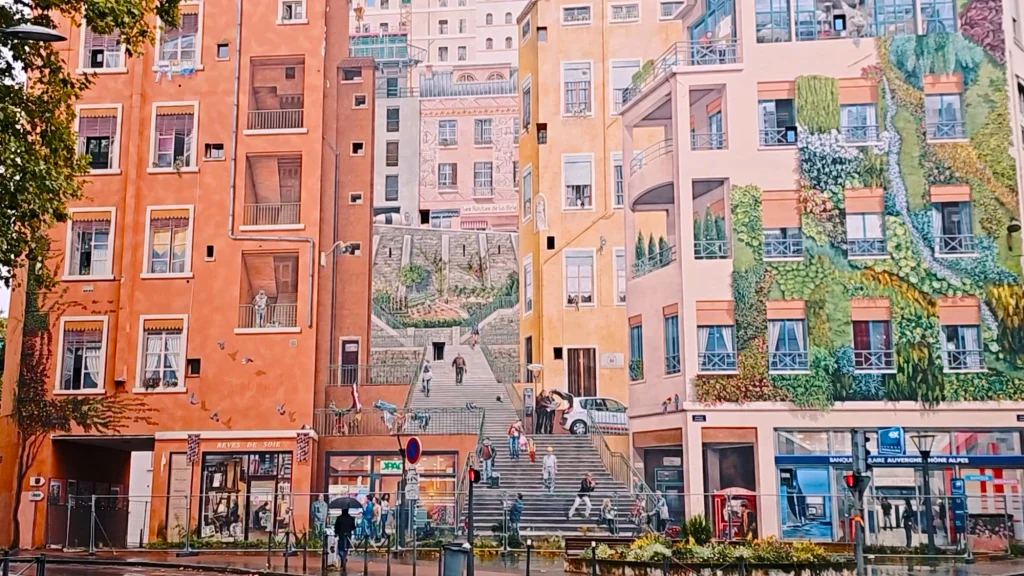
The silk workers are honoured in the most remarable mural in Lyon, Le Mur des Canuts, or the wall of the silk weavers. This giant fresco is the largest trompe l’oeil mural in Europe and covers the whole side of a six-storey building. It is a extrordinary piece of art, and worth going out of your way to see (it is in the Croix-Rousse area of the city). There are many other murals across the city, over 150 in all. Initially started by a group of young artists as a rebellion against the fine art they were being taught, the murals are now part of Lyon’s heritage.
Lyon is an interesting city to visit. It is more laid back than Paris and has its own style and history. I certainly wouldn’t say a stay here was an alternative to Paris, but it makes an excellent inclusion to a France itinerary and is a convenient stopping point on the way down to the riviera.
If you are planning your first trip to Europe then make sure your read How to plan a trip to Europe: the 3 essential first steps

If you need help with planning your trip then check out our services

If you have any questions about travel itineraries in Europe then drop us a line.  We are happy to help.

If you want more tips and ideas for visiting Europe then FOLLOW ME ON INSTAGRAM and subscribe to my YouTube Channel