
The term boutique hotel conjures up an image in most people’s minds, but is that image the same? If you want to do a trip to Europe and stay in boutique hotels, how do you know what you are going to get? How does a boutique hotel differ from any other hotel, and is it necessarily better?
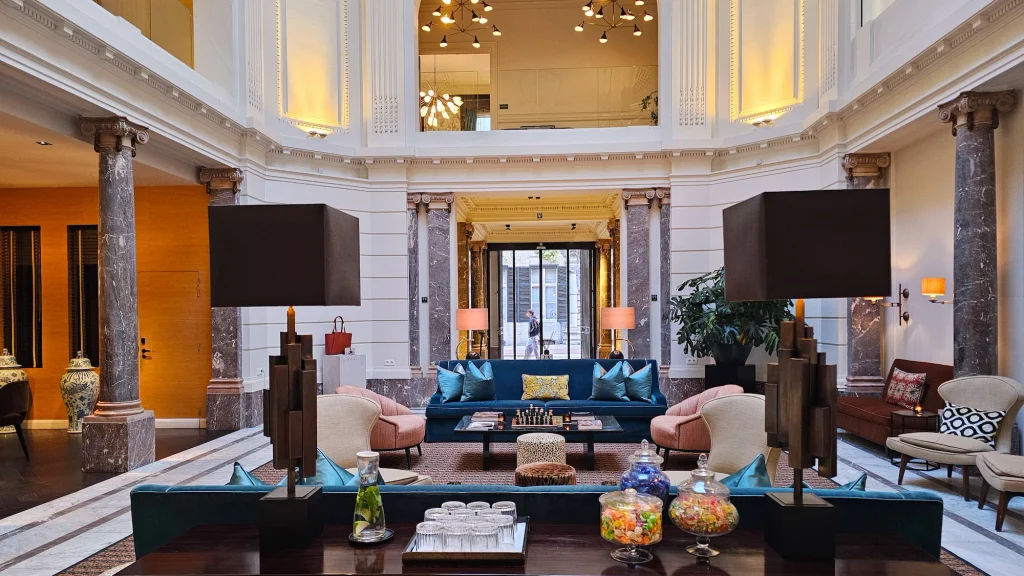
Definition of a “Boutique” Hotel
Boutique is at the end of the day a marketing term. It is used by hotels and PR companies to market the hotel in question as being different, and somehow better, than its competitor. There is no globally recognised definition. Multiple aspects go into the idea, which is why defining it is difficult.
I would like to define it for the terms of The European Compass. This will not be an ultimate definition; it may change over time. I believe language to be important, so if I am using a term on a regular basis, and boutique hotels are my preference, then I should have a definition as to what it is meant for the articles on this site.
How big is a boutique hotel?
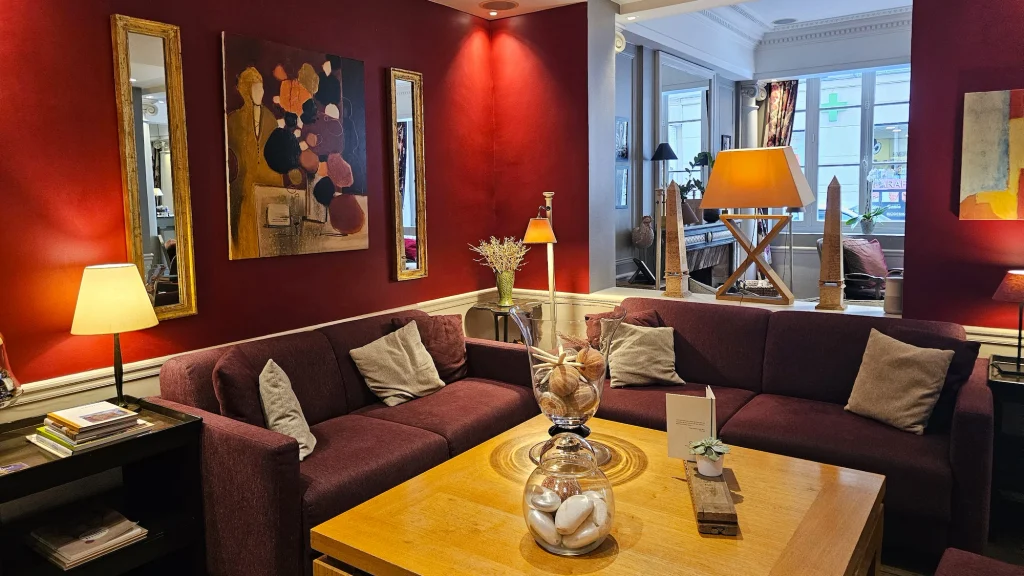
There is a general agreement that they are small-capacity hotels, but even the word small is ambiguous. Smith Travel Research has them as being smaller than 200 rooms. But 200 rooms is not what I would consider small. The nearest tourist town to where I live in France is La Rochelle which only has one hotel over 100 rooms, despite being one of the more visited towns in France. So, a 200 room hotel would be large on this scale.
Wikipedia cites 100 rooms, which many other studies seem to agree with. Some surveys put customer understanding of the term as low as 20 rooms. However, as I have stayed in some very good hotels that I would class as boutique at the 40 room mark, I think 50-60 should be the limit.
But size isn’t everything, all boutique hotels are small, but not all small hotels are boutique.
Is a boutique hotel always independent?
I think there is an idea in many people’s heads that a boutique hotel is an independent one. But these days that is far from the case. Many of the large hotel chains have seen the demand for “boutique” properties and have jumped on the bandwagon. Accor group for instance has a brand called the MGallery which consists of 128 boutique hotels with a total of around 15 thousand rooms. I am in two minds about this. On one hand I would love for all boutique hotels to be independent, but I also understand that the industry doesn’t work like that. Many hotels start out as independent, then they expand to another property, or get taken over by a group. That doesn’t necessarily change the hotel and the experience you would have there.
For my definition I am going to say that a hotel doesn’t have to be independent to be a boutique, but that if it is part of a chain then the other criteria need to be closely met for the definition to stand.
Are all boutique hotels in historical buildings?
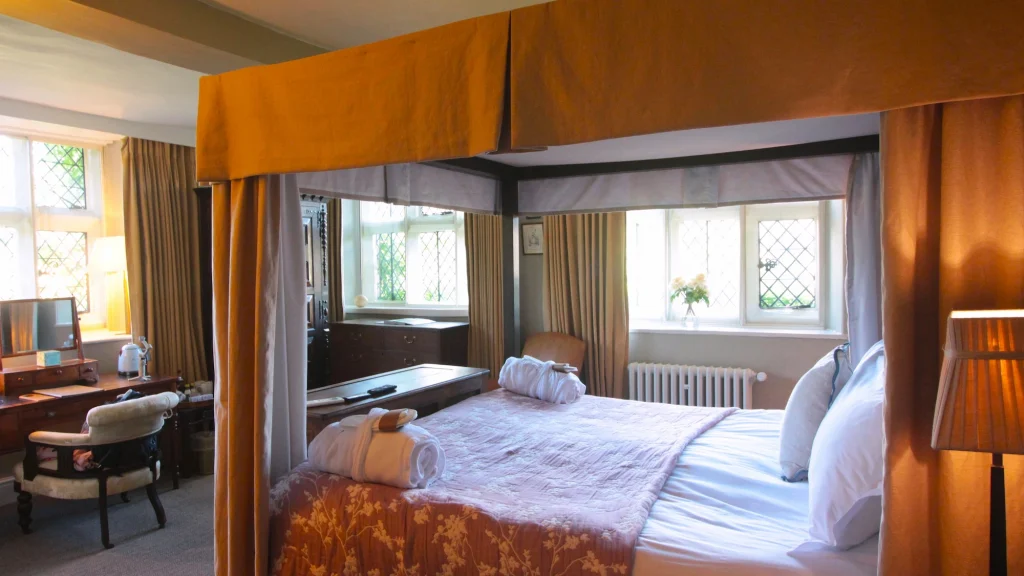
Most boutique hotels I see are in historical buildings. In part that is because I am covering Europe where city centres are full of old buildings. Modern hotels that get built are normally on the large side to warrant the building costs. That is not to say a modern building cannot be a boutique hotel. Part of the boutique feel is a sense of place, and an originality. It is more difficult to achieve in a modern build, but not impossible, so the age of the building isn’t on its own a criterion.
Does the location of a boutique hotel matter?
Many boutique hotels are in city centres, often the historical district, but they can also be found in the countryside, by the beach and near World Heritage Sites.
There are places where I would not expect to find a boutique hotel, and where the location might affect the definition of the hotel even if other criteria were met. I would not expect to find a boutique hotel near an airport, in an industrial estate, or in a big commercial or business area. These are the places I would expect to find large chain hotels, and I think it would be difficult for a small hotel to have the sense of place needed in such a location.
Is a boutique hotel the same as a design hotel?
Design is definitely an element to the boutique feel of a hotel. Some boutique hotels are also design hotels, but I don’t think it is essential. Some of the best boutique hotels are old historic hotels that still have much of the antique furniture and artwork. Whereas to my mind a design hotel is one where every element has been chosen and curated to fit into a certain theme.
Style certainly plays its part. I would expect a design hotel to have a certain level of style. Something that is unique and couldn’t easily be copied. Where the building or the destination is part of the style.
Should a boutique hotel have individually designed rooms?
This is one of the features that make a hotel feel boutique. Where each room has its own character and design. This is easier to achieve in an historical building as room sizes and shapes tend to be different giving a character even before the décor. It is also one of the things I find chain groups get wrong when they are going down the boutique route. By their nature chain hotels have centralised purchasing power, meaning that furniture and decor are bought in bulk. It is far more difficult to make a room feel individual if every room in the same chain has the same furniture and artwork.
Artwork in particular is a great way to give rooms and hotels an individual feel and a sense of place. For example, by using work from local artists and photographs from around the city. Yet this is something often lacking, with the same picture being used across multiple cities.
So, I would say that yes rooms should be individual. That doesn’t mean they can’t have elements in common, but if the furniture is the same then some of the other styling should be different, be it wall colour, soft furnishings or artwork. If all the rooms are the same then it is just a small hotel, not a boutique hotel. That doesn’t mean it is a bad hotel; we are just trying to define boutique.
What does a boutique hotel feel like?
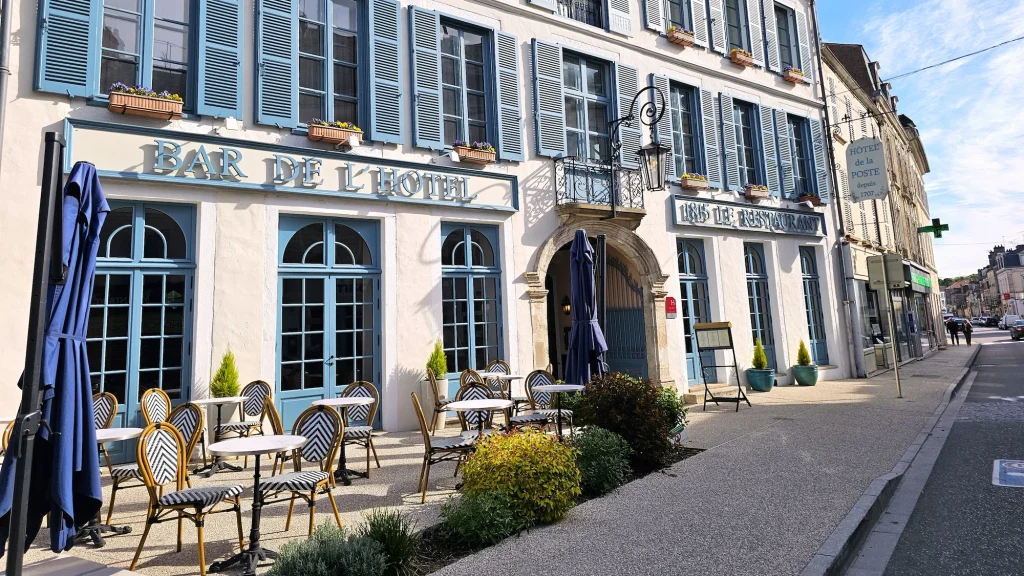
Feeling is one of the most important aspects of what makes a hotel boutique, yet it is one of the more difficult things to pin down. The feeling should be intimate, perhaps discreet. It should feel as though you are a guest not a business transaction. It should not feel corporate.
When you are looking for a hotel, you think “I don’t want to stay in the same hotel I could find anywhere in the world”. You don’t think “I want 27 rooms and individually designed furniture” A boutique hotel should become part of the travel experience.
Does service matter in a boutique hotel?
There is much written about how a boutique hotel should be able to provide a personalised service to its guests. In many respects some of that comes down to size. It is easier to treat people personally if there are only 50 guests and not 500. I would expect service to be friendlier in general than that of a large chain hotel.
But the small size does mean fewer staff, so I wouldn’t expect the same sort of service that a large chain hotel can provide. I don’t, for example, expect the restaurant to be open 24 hours, in fact I don’t even think an onsite restaurant is essential for a boutique hotel if it is in a city centre. I also wouldn’t expect room service. Some boutique hotels will provide it; I just don’t think it is a criterion.
Cory Hagopian, of Virtuoso, is quoted as saying Passalacqua, a boutique hotel on lake Como, means “Eat whatever you want, wherever you want”. This, to me, is mixing the idea of a boutique hotel with ultra-luxury. A hotel can be both, but the essence of a boutique hotel is that it is small and that you are treated as an individual, not that you can get anything you want at any time.
Are boutique hotels always luxury?
I would say not necessarily, but they should have a certain level of comfort and facilities. I wouldn’t class anything under a three-star hotel as boutique. But luxury itself has many different meanings. You may expect a luxury hotel to have a swimming pool and spa facilities, both of which are often missing from boutique hotels due to their size and location. Luxury hotels often have multiple restaurants, and I would say anywhere big enough to have more than one restaurant is not boutique.
The European Compass definition of a Boutique Hotel
For a hotel to be considered a boutique hotel it should:
- Have less than 60 rooms (preferably under 50)
- Be in a historical, or uniquely designed building
- Be located within a city centre, or a centre of interest. Not in a commercial or business zone
- Have a unique style that cannot be copied
- Have a sense of place
- Have an intimate feel that makes guests feel welcome
- Have rooms with individuality or character
- Give a personal level of service
- Have at least a 3-star rating
- Independent or small group. Can be part of a larger group if all the other criteria are clearly met
Testing the definition on my recent hotel stays
Hotel de la Poste – Avallon Independent 30 room hotel with a real history and personality. A great example of how a boutique hotel has personality and history
The Peacock at Rowsley historical hotel with 15 rooms and 4-star rating, part of a small chain. Meets all the criteria for a boutique hotel particularly for its history, size and personal level of service.
Hotel Sainte-Beuve Paris – 22 room independent 4-star hotel on the left bank. This is a classic example of a boutique hotel particularly for its size and home from home feel. YouTube video review coming very soon.
Hotel FRANQ Antwerp – Independent 4-star hotel in a converted bank in the historical centre. Meets all the criteria for a boutique hotel particularly the uniqueness of the building. Full review coming soon
NH Collection Madrid Palacio de Tepa Part of a large chain which doesn’t automatically exclude it, but it has 83 rooms which is above my definition. This is an absolutely lovely hotel, but it does not meet my criteria for a boutique hotel.
If you are planning your first trip to Europe then make sure your read How to plan a trip to Europe: the 3 essential first steps

If you need help with planning your trip then check out our services

If you have any questions about travel itineraries in Europe then drop us a line.  We are happy to help.

If you want more tips and ideas for visiting Europe then FOLLOW ME ON INSTAGRAM