
Most travellers will fall into the “hidden gems” trap one way or another. You plan to go to a city, start to do some research. Before you know it your search results are flooded with blogs and posts about hidden. These are places you have never heard of, but are told you absolutely have to visit. The images look beautiful.
So you write a list and you go. You take time out of your busy sightseeing schedule to go to a café that is in a totally different neighbourhood to the one you were planning on, or you take a drive 2 hours out of your way to visit an undiscovered village.
And then when you get there you find a queue out of the door of the café, or no spaces left in the car park in the village.
The truth is that if you read about it on the internet, so did thousands of other people. Often these, so-called, hidden gems are only unknown to the international tourists, so there are just as many people there as the better know spots, just domestic visitors rather than international ones.
Or if it really was a hidden gem until it was praised on the internet, then it doesn’t have the infrastructure to cope with an influx of visitor. Not enough tables or servers at the café for hundreds of customers to turn up to at once, not enough parking spaces or public toilets and the small, hidden village.
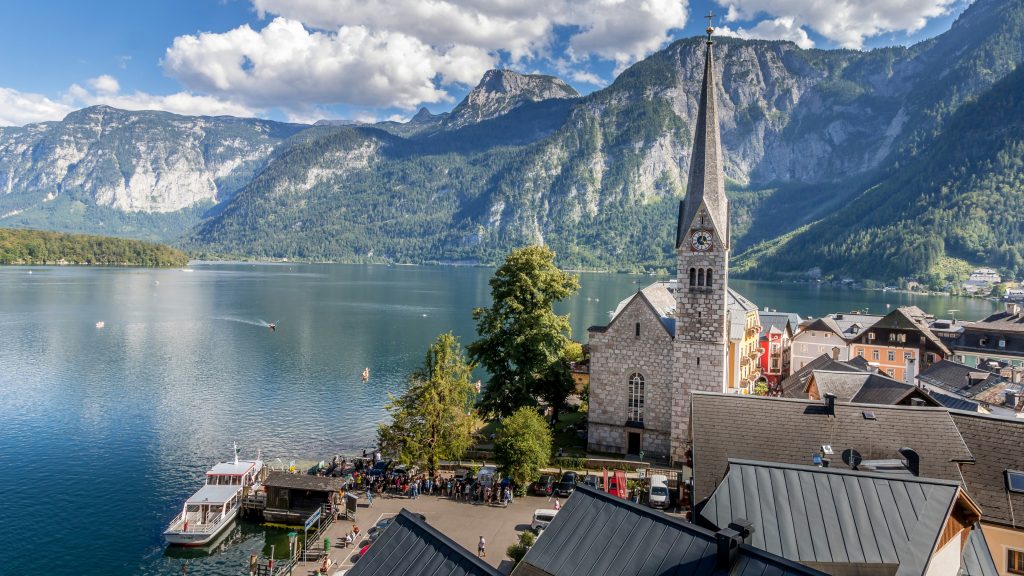
Take the example of Collioure in the south of France for example, a hidden gem that is so popular that the streets are now packed with tourists. Or Hallstatt in Austria that gets about 10,000 vistors a day when only 780 people live there.
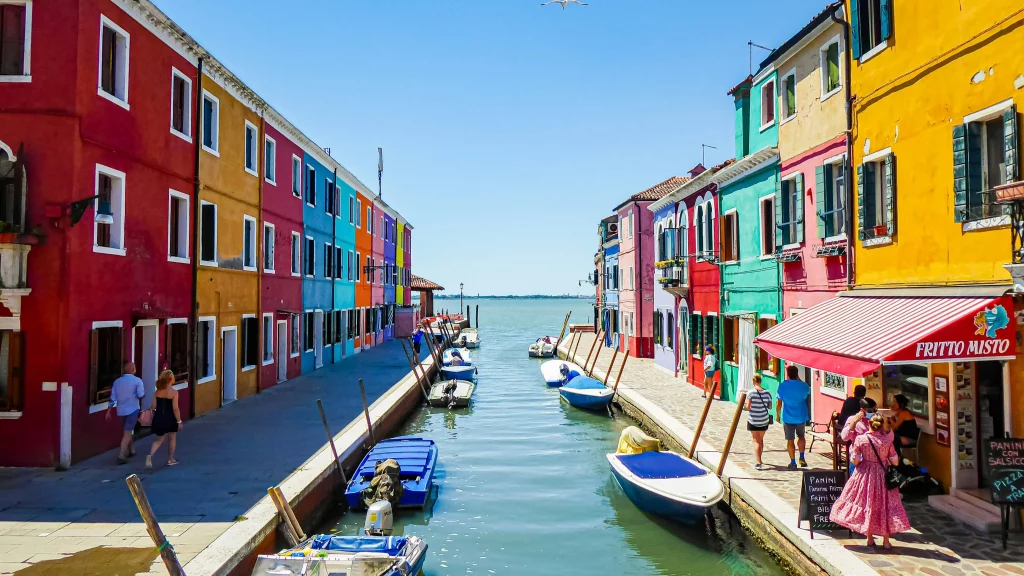
Just yesterday I saw Burano in Italy referred to as a hidden gem. This is an island that gets a million visitors every year.
I think there are two reasons people are drawn to the promise that is the hidden gem.
The first is the problem of overcrowding. There is no getting away from this, all the main tourist spots in Europe are crowded. And for some the crowds can take away the pleasure of seeing somewhere. I believe the answer to this is clever planning. Working out when the busiest times are and avoiding them. In some cases that can be as simple as avoiding the times the cruise ships are in port. Or getting up an hour earlier.
The pull to the hidden gems is the desire to be different, to see something special or unique. To find something that is somehow better than the main tourist attractions, as though being popular makes something somehow less worthy. It is a bit like turning your nose down at a best-selling book because a best seller can’t possibly be good literature.
Chasing hidden gems in Europe can cost you time you would otherwise spend enjoying iconic sights. It’s a bit like spending hours hunting for a diamond chip when the crown jewels are right in front of you.
As a tourist you will often get more out of a place that has been designed with travellers in mind. Museums with English speaking staff, cafes with menus in English and opening hours that fit with when you are used to eating, hikes that are well signposted and finish at a visitors centre with public toilets. Hidden gems are often much more work than popular tourist spots. They are not in the centre of things, near metro stops or just off the highway. This can mean that they take up far more time than the standard destinations, even when you account for the queues. And often you will end up waiting in line longer at the secret place you have found, particularly if it is a café or restaurant that is being pushed by a popular influencer.
To find a true hidden gem you need to take a risk. If you want to go somewhere that isn’t talked about, that others haven’t found then be prepared for disappointment. You may have to kiss a lot of frogs before you find your prince. If you walk from a city centre for an hour in one direction and then look for somewhere to eat then you might get lucky and find the little local gem. But you are just as likely to end up in a quiet residential area with little charm, or a out of town shopping centre full of chain fast food restaurants. If you really want to live like a local then this could be your chance.
If you are on a multi-destination trip to Europe you likely do not have time in you schedule to see everything that there is to offer the tourist in a city. If you wanted to go somewhere just a little different, without going off the beaten path, then take a look at the second tier tourist spots.
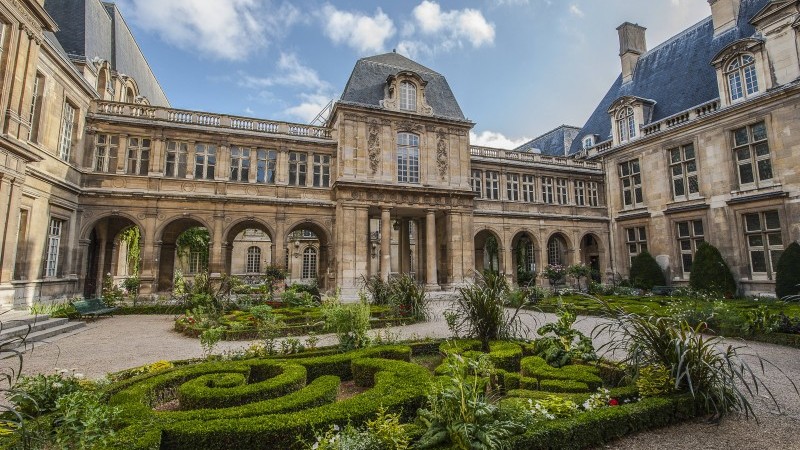
The Musee Carnavalet in Paris is the 10th most visited museum in Paris, yet gets just a small percentage of the number of visitors that go to the Louvre. In any other city this would be the number one draw, it is a fabulous museum, and yet when I recommend it few have heard of it. I would never call the Carnavalet museum a hidden gem, because it would do it a disservice. It is a world class museum. But the experience you have when you go there is the type of experience you hope for when you seek somewhere off the beaten track. It is less crowded, less frenetic and more intimate. In case you are interested it is a museum that covers the history of Paris which I recommend to everyone going to Paris.
Similarly, the Sir John Soane’s museum in London is a remarkable place. And it is free. This has been a museum since 1833 and as it is a national collection cannot be considered hidden. Yet by going there you will be having a different experience to the majority of visitors to London.
See the Icons First. Then Look for Hidden Gems
Don’t ever let anyone tell you that the places you want to visit are over rated just because they are popular. Do not be put off going to the spots you have seen in movies and read about in books to go to a place that someone you have never met says you have to go to. Go to the best sellers. They are best sellers for a reason, often because they are truly remarkable and one of a kind. Climb the Eiffel Tower and kiss the Blarney stone. Wonder at the ceiling in the Sistine chapel and wonder at the Sagrada Familia. Let yourself be a tourist. You can save the hidden gems for when you have seen the good stuff.
If you are planning your first trip to Europe then make sure your read How to plan a trip to Europe: the 3 essential first steps

If you need help with planning your trip then check out our services

If you have any questions about travel itineraries in Europe then drop us a line.  We are happy to help.

If you want more tips and ideas for visiting Europe then FOLLOW ME ON INSTAGRAM