
If you are only in Rome for a short period of time, then you want to see as much of Rome as possible.
I designed this walking tour to take in some of the most important churches in Rome, whilst also seeing a large part of Rome on foot. I enjoy visiting churches across Europe as they display the finest architecture and artwork across the centuries. Nowhere is this more true than Rome. I’ve put together a map of this free walking tour that takes in the best churches in Rome. You can get the link at the bottom of this page.
A couple of things to note before your set off. This is an 8.5 km walk (5.2 miles) so make sure you wear comfortable shoes. Be respectful in your choice of clothing, it is expected that you do not show shoulders or knees inside the churches. I carry a light scarf with me to cover my shoulders on a hot day.
This walk is best done on a weekday. It can be done on a Saturday but some of the areas get busy, and visits to churches on Sundays are limited due to church services. It is possible to attend the church services, but that wouldn’t work for the walking tour.
The walk starts at Santa Maria in Aracoeli Basilica which sits on the highest point of Capitoline hill, giving a fantastic view across Rome. There are a lot of steps to climb to reach the church, which is another reason to do this one first rather than later in the day when legs might start to feel tired.
1. Santa Maria in Aracoeli Basilica
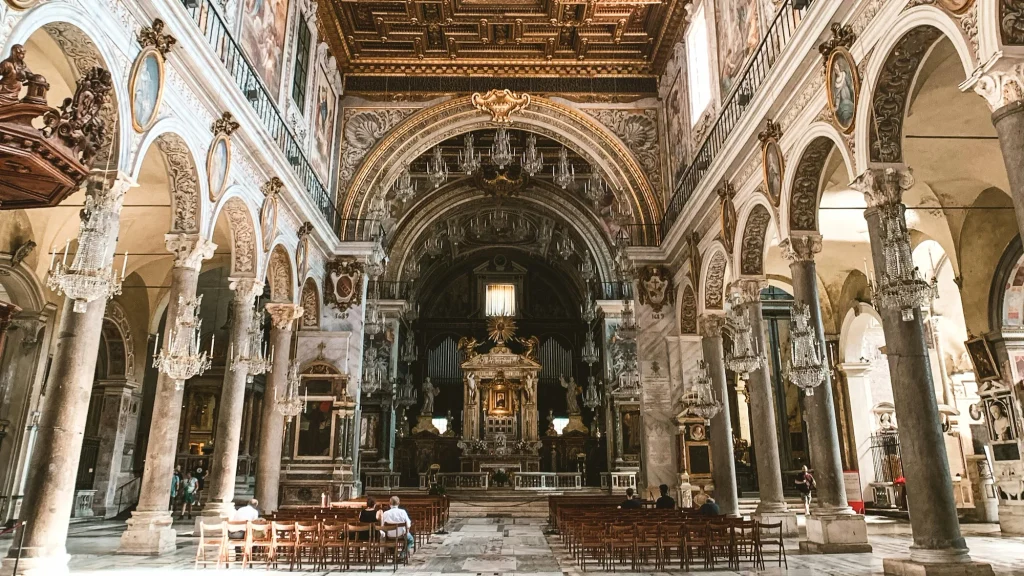
These same stairs are considered to be a sort of Scala Sancta, meaning that pilgrims would climb them on their knees to show devotion. The name of the church means Saint Mary of the altar in heaven.
The church is highly decorated, with a moulded ceiling and many portraits atop the pillars. The floor is covered with grave markers, including one for an archdeacon that was created by Donatello.
All the columns are different as they were scavenged from ancient sites across rome. The Murano glass chandeliers (I counted 52) are lovely.
Cross the Piazza d’Aracoeli. Walk towards the reddish brown building with turrets and turn to the left, down Via di San Marco. Turn right down Via d’Aracoeli (there is a fabric shop worth visiting on this corner if you are interested) as you come into Piazza del Gesù. Chiesa del Gesù is on your right.
2. Chiesa del Gesù
The official name of this church is Chiesa del Santissimo Nome di Gesù all’Argentina but I think you will agree that is a bit of a mouthful. This is the mother church of the Jesuits. The façade has been described as the first truly baroque façade.
My favourite part of this church, as with many in Rome, is the ceiling. Here there is an impressive fresco by Giovan Battista Gaulli called Triumph of the name of Jesus. Best viewed from the point marked on the floor by the letters IHS (the first letters of Jesus in Greek).
Coming out of the church turn right, then at the intersection cross over and go down the narrow Via del Gesù. Turn right at the end down Via Santa Caterina da Siena and you find yourself at the rear side of Basilica of Santa Maria Sopra Minerva. Outside of the Basilica is an ancient Egyptian obelisk on the back of an elephant created by Bernini. One of the things I love about Rome is turning a corner and finding centuries old sculptures and monuments.
3. Basilica of Santa Maria Sopra Minerva
The Basilica has a remarkably plain façade for what is the only Gothic church in Rome. Much of the attention here is focused on the Elephant outside, and many visitor skip the inside of the church, which is a shame.
The gothic elements of Santa Maria Sopra Minerva are most evident in the vaulted ceiling, painted blue with gold stars, which is a real contrast from the white and gold frescos see elsewhere.
Coming out of the church cross the piazza and turn right and you find yourself at the Pantheon.
4. Pantheon
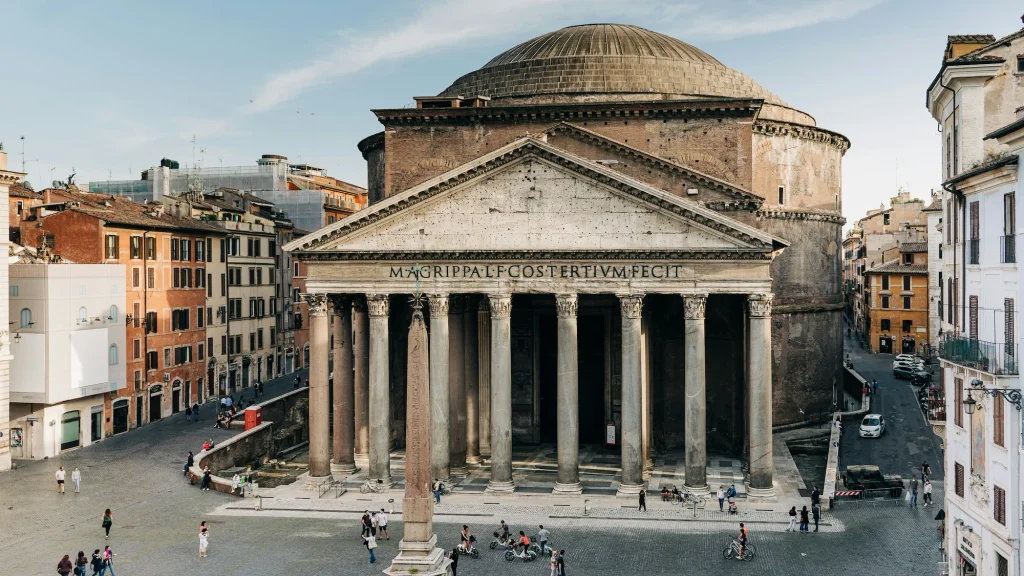
The Pantheon is one of the most visited sites in Rome. It is worth noting at this point that the Pantheon opens at 9am. It is one of the busiest points on this route so I recommend getting there as early as possible. This is only about 15 minutes walk from the starting point, so allowing for 20 minutes or so per church an 8am start would get you to the Pantheon before opening.
The Pantheon is the only church on this list that requires tickets for entry. You can buy the 7€ ticket in advance here:
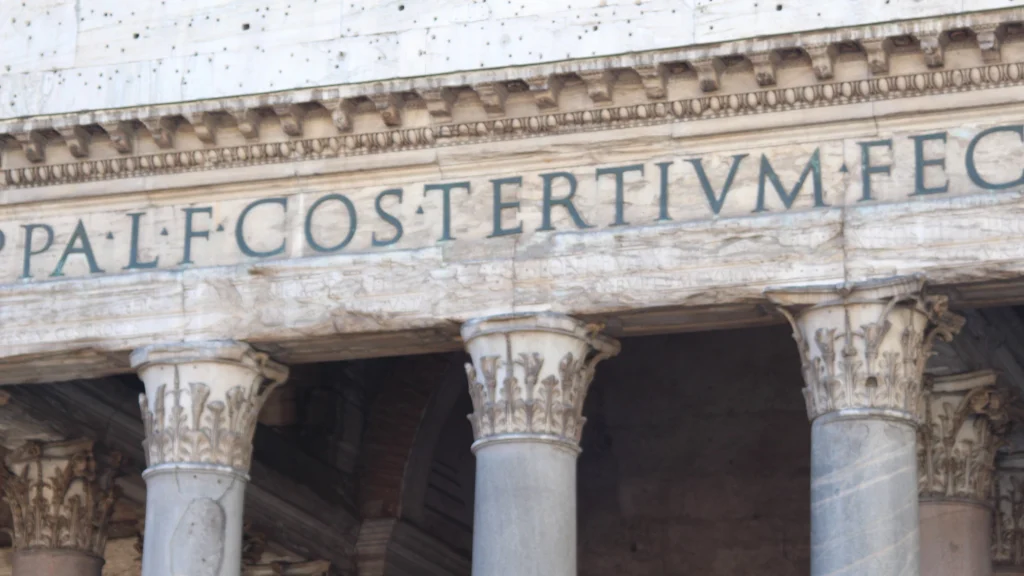
The Pantheon is the best-preserved ancient Roman building in all of Rome, surviving nearly 2,000 years since it was built. It was converted into a church in 609 AD and is still used for services today. The Dome, which is 43m from top to bottom, and side to side, is the main attraction. It is the largest concrete dome in the world, even in the 21st century that record hasn’t been beaten. Roman engineers really were amazing.
The Piazza della Rotonda is one of the busiest piazzas in Rome with its fountain and the Obelisk of Ramses II at the centre. Half way along the piazza on the left hand side (with the pantheon behind you) take the narrow Via Giustiniani Which will lead you to the Piazza di San Luigi de’Francesi and the church of San Luigi dei Francesi.
5. Chiesa di San Luigi dei Francesi
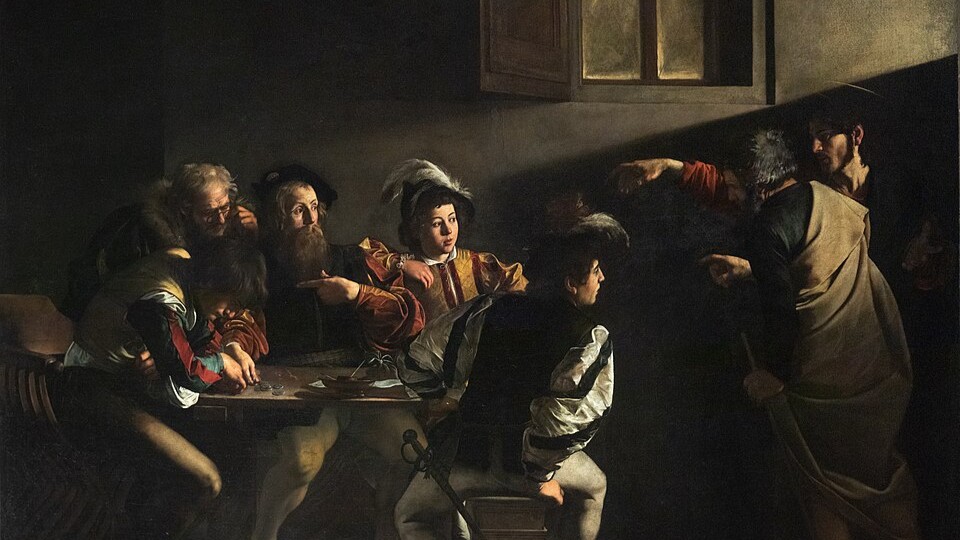
The church of St Louis of the French is full on Baroque, with the gold painted reliefs covering the ceiling. But the ceiling isn’t the reason to visit this church. This church is all about art. In the last chapel on the left hand side of the church you will see three masterpieces by Caravaggio, The Calling of Saint Matthew (on the left wall), The Inspiration of Saint Matthew (above the altar), and The Martyrdom of Saint Matthew (on the right wall). All show what a genius Caravaggio was at capturing light. A 1€ coin lights up the paintings.
Coming out of the church turn left and walk down Via della Scrofa then turn left down Via di San Agostino to Basilica of Sant’ Agostino
6. Basilica of Sant’ Agostino
There’s another Caravaggio in the Basilica of Sant’Agostino. This time Madonna of the Pilgrims. I love the portrayal of Jesus as a baby here. The way he is holding on to his mother is so realistic, and the merest impression of a halo over Mary is the only hint we get as to who she is.
There’s a Madonna sculpture here, which is a popular site of prayer for pregnant women and those wanting to get pregnant. And if that weren’t enough reason to visit there is also a fresco by Raphael.
At this point you are just around the corner from the Piazza Navona so you could take a look while you are here. It is a large impressive piazza with some nice fountains and yet more obelisks but is very touristy.
From Basilica of Sant’ Agostino Turn left, back the way you came, and continue on Via delle Coppelle. If you are ready for a gelato then the Gelateria della Palma is a good choice. Turn right here down Via della Maddalena and onto Piazza della Maddalena.
There you will find Chiesa di Santa Maria Maddalena.
6a. Chiesa di Santa Maria Maddalena
This was not on the original list of 13, but you are walking right past so you should take the time to step inside.
The interior is particularly ornate, especially the organ. This is definitely not a church for minimalists.
From here walk down Via delle Colonnelle, onto Via in Aquiro. At the end if you turn left you will see the Obelisco di Montecitorio, a 6th century BC Egyptian Obelisk brought to Rome by Emperor Augustus.
Instead, turn right down Via della guglia, left down Via dei pastini and onto Piazza di Pietra, taking a moment to wonder at the columns of the Temple of Vibia Sabina and Hadrian. (it is worth coming back here at night time for the light projections).
Walk down Via di Pietra, crossing the busy Via del Corso, down the Via delle Muratte and on to the Trevi Fountain.
Trevi Fountain
Whilst this isn’t the focus for this walk, it makes sense to walk past and see it. You now have to pay a fee (2€) to get close to the fountain, viewing from the piazza is free. Much as this is a spectacular fountain it is so touristy as to be almost unpleasant, so it isn’t my favourite spot in Rome.
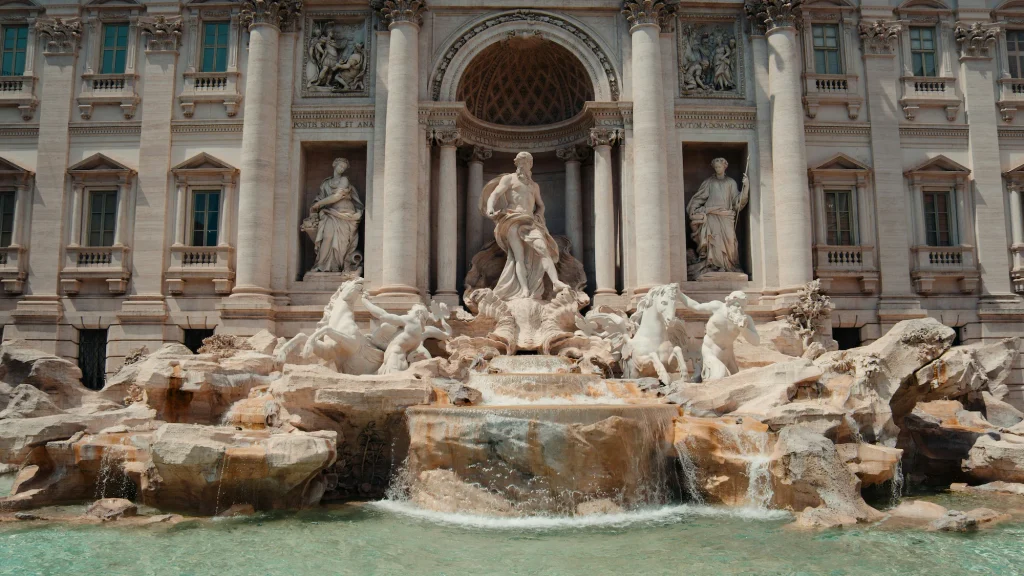
Walk from The Trevi fountain down Via del Lavatore and keep going straight down Via in Arcione, Via Rasella until you reach the Via delle Quattro Fontane (You come out by the Palazzo Barberini and the National Gallery of Ancient art) turn right and walk up the hill and you will see the San Carlo alle Quattro Fontane on the corner of a crossroads.
7. San Carlo alle Quattro Fontane
This is a really lovely church. The Baroque architecture is all curves and swirls. It’s a small plot on a busy intersection, where architect Borromini created a geometrically complex and serpentine building. The oval dome is simply exquisite.
From The San Carlo church walk up the Via Venti Settembre, which is a wide street with some embassies and government buildings. Cross a busy intersection at the Piazza di San Bernardo and you will reach the Santa Maria della Vittoria
8. Chiesa di Santa Maria della Vittoria
Considered to be one of the sculptural masterpieces of the Roman Baroque era the Ecstasy of Saint Teresa by Bernini is what brings people to the Santa Maria della Vittoria. The outside of the church is unassuming but the marble inside certainly isn’t.
Across the road from the church is the Fountain of Moses which marks the end of the Felice aqueduct, which used to bring water to the area.
From here walk along the Via Vittorio Emanuele Orlando take a left on Via Giuseppe Romita followed by a right to walk in front of the Aula Ottagona museum. Keep to the left hand side as you come up to the busy intersection with the Fountain of the Naiads in the middle. This one of the more modern fountains in Rome (inaugurated in 1914 after being hidden for some time due to the provocative nature of the sculptures)
Santa Maria degli Angeli e dei Martiri, is a brick building on the left as you keep walking.
9. Santa Maria degli Angeli e dei Martiri
Note the church is currently undergoing restoration so opening may be affected, check the church website before going.
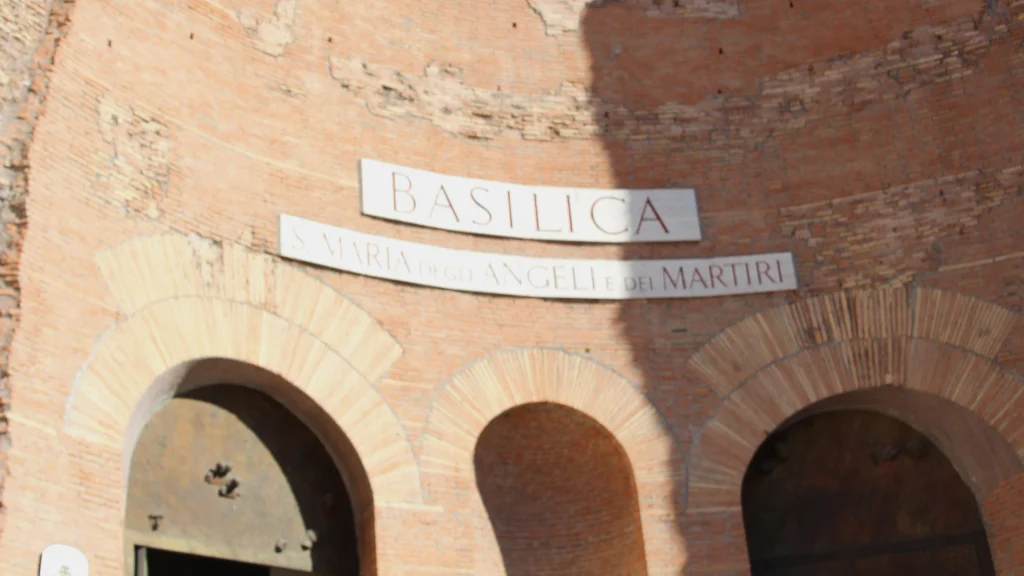
This is the church built on the ruins of a roman baths designed by Michelangelo when he was 86. Going in through the brick exterior, which was the original hot room of the baths, you would never know there was a massive renaissance church hiding.
Cross over the roundabout down Via Nazionale and take a left down Via Torino at the end of which you will find the rather impressive frontage of Santa Maria Maggiore.
10. Santa Maria Maggiore
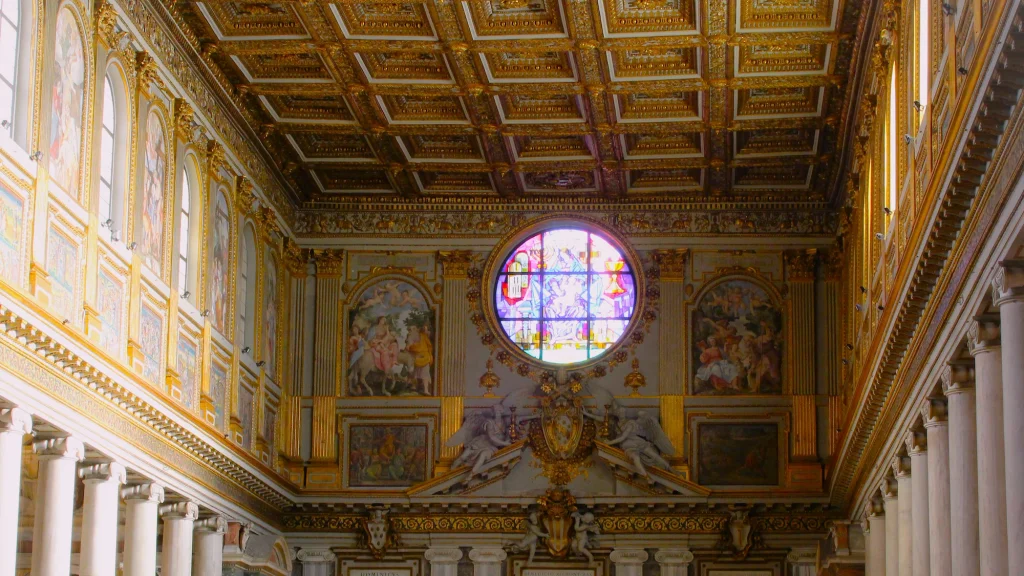
This is a papal basilica, which means that technically it belongs to the Vatican. It is the largest Marian church, a church dedicated to the worship of Mary, in Rome. It is a pilgrimage site and has welcomed pilgrims for nearly 1600 years. The spectacular, ceiling in encrusted with gold, said to be some of the first gold brought back by Columbus.
There are some quite remarkable byzantine mosaics about the nave that date back to the church’s origins in the 5th century, and our favourite bit was the eye of providence surrounded by cherubs.. It is also the home of Bernini’s tomb.
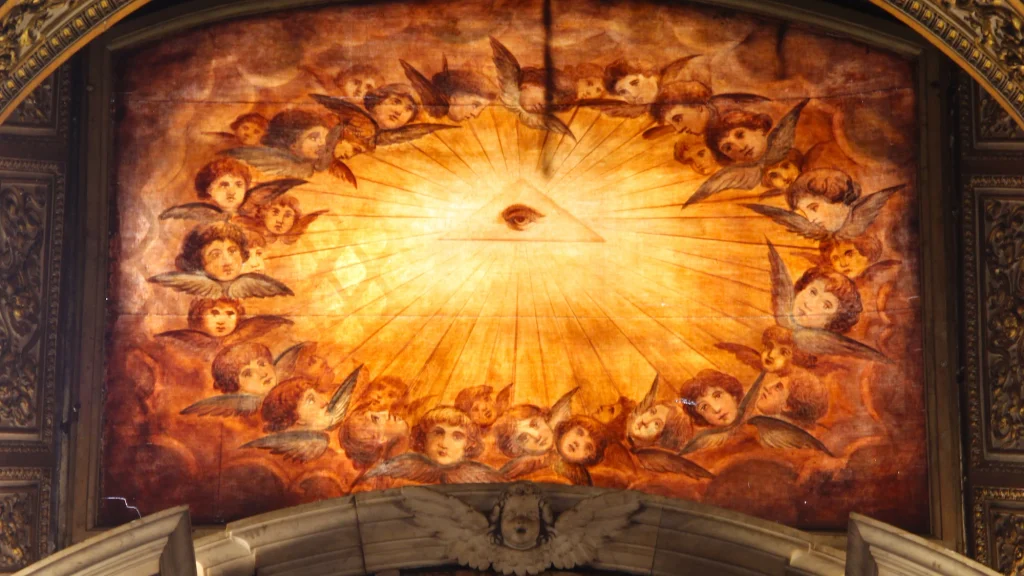
The difference between these two last churches is one of the thing I love about this tour. You really see that churches in Rome all have their own personality.
Lunchtime in Rome
Walk down Via di Santa Maria Maggiore, and once it turns into Via Panisperna you will find Ristorante Tema, which is my recommendation for lunch. We got lucky here without a reservation, but do check the opening times, it isn’t open on Saturday for lunch and is closed on Sundays. This is proper Roman food away from most of the tourists. Gluten free is available on request.
Timing here matters as lunch service doesn’t go all day. In order to make it for lunch each church visit needs to be kept at 15-20 minutes. With just over an hours walking that should get you here around 12:30, 1pm. The afternoon is much less packed with only 3 churches so you can take you time over lunch. The next church closes until 3pm so there is no hurry. If you don’t manage to start early, or want something different then there is a good choice of restaurants on Via Flavia just after the Chiesa di Santa Maria della Vittoria.
From ristorante Walk down the street opposite, Via dei Capocci, turn left at Piazza degli Zingari onto Via Urbana, continue to Via Leonina until you see the steps on the left hand side. Take these steps, crossing Via Cavour, up some more steps until you get to Basilica of San Pietro in Vincoli.
11. San Pietro in Vincoli
Of all the churches in Rome, this is perhaps the one that hit home to the girl that used to do bible study. It holds the chains that held St Peter in Jerusalem. The actual chains.
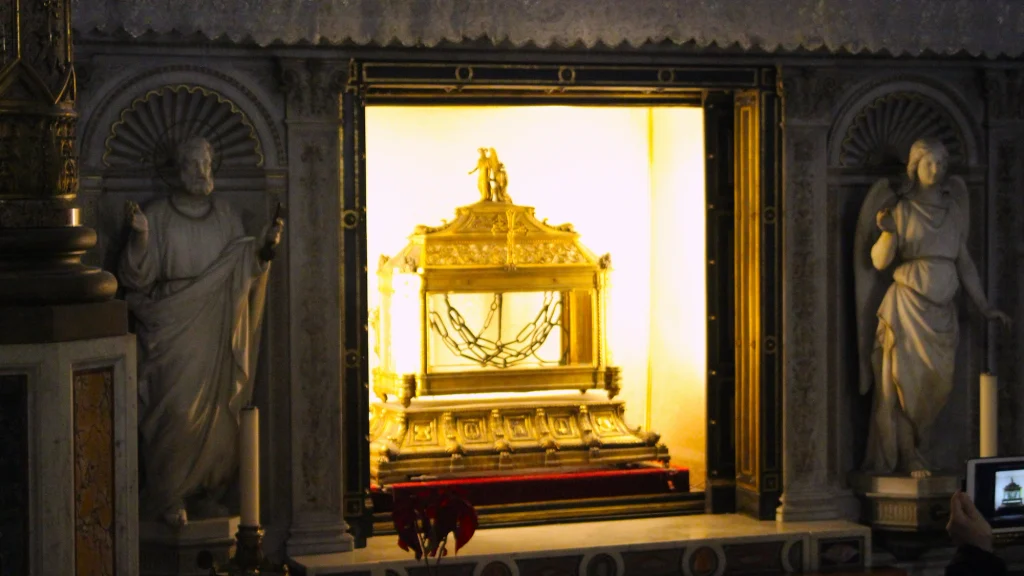
It also has Michelangelo’s statue of Moses which is remarkable. As is the fact that when we visited there were very few people, no queues, no ticket entry and no guards. The outside is unassuming, and it is a little tucked away so you would only come here if you knew about it, but I still find it incredible.
From here walk down Via Eudossiana, past some of the university buildings, Continue on Largo della Polveriera, then as you turn right on Via Delle Terme di Tito you will find yourself faced with the Colosseum.
The Colosseum isn’t included in this route as a visit, I recommend doing it on a different day along with the Forum.
Turn left at the Colosseum and walk along Via Nicola Salvi (there are some good photo opportunities here) . At this point you can go through the gates and into the park, walking along Vle della Domus Aurea and then right on Viale Fortunato Mizzi before going down the steps to rejoin Via Labicana. This isn’t shown on the map as the gates are not always open. Walk along Via Labicana, which looks unpromising as a tourist standpoint, which possibly why few tourists make it here, then turn right onto the Piazza di San Clemente. The Basilica di San Clemente is on your right.
12. Basilica di San Clemente
This is a fascinating walk through history, or rather a climb down. This church is on 3 layers, the lowest of which were built in the 1st century. The middle layer is the original, or first, basilica and the current basilica was built on top.
The ceiling here is one of the finished and richest in the city, and that is against some very stiff competition. There are some pretty remarkable mosaics in the nave too.
From here walk down Via di San Giovanni in Laterano, which it has to be said isn’t the most interesting street in the world, but you will be rewarded at the end with an open plaza, yet another obelisk, this time the Lateran Obelisk, the largest standing Egyptian obelisk in the world, and the tallest in Italy. Behind it is the Basilica of San Giovanni in Laterano the last church on our list.
13. Basilica of San Giovanni in Laterano
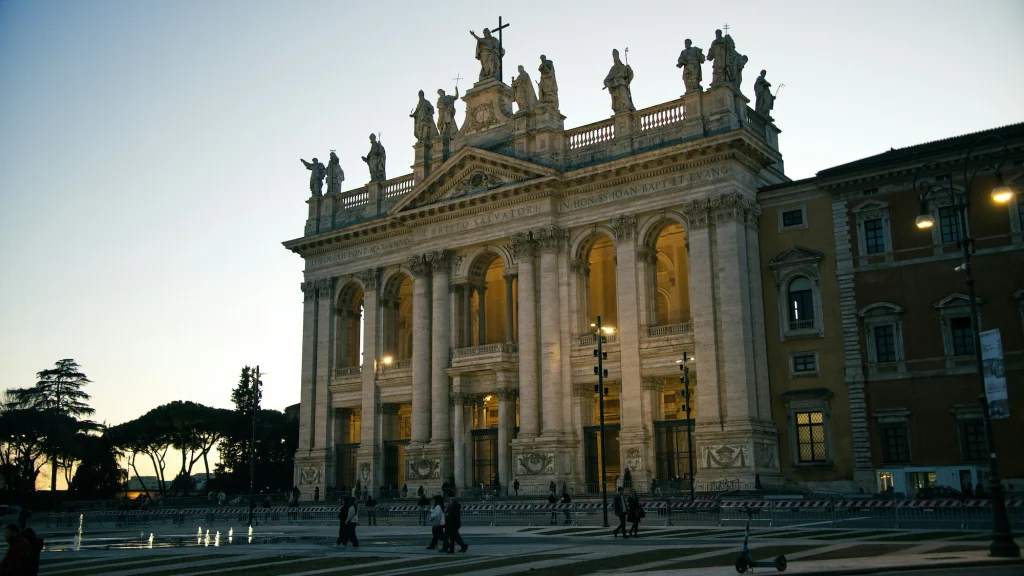
This is technically the cathedral of Rome as it is the Pope’s official seat. It is the oldest and highest ranking church in the Catholic world. The scale of the place is immense. You may think you will be all churched out by this point, my children certainly were, but I defy you not to be impressed by this place.
At this point you are close to the San Giovanni Metro station if you want to use the Metro to return.
Many of these churches deserve more than the 20 or so minutes this route allows, but if you are only in Rome for 3 or 4 days then doing a walk at this pace allows you to see as much as possible. I’ve made life easy for you by putting it all together on a map, you can get it below. This walking tour is day 2 of my guide to 3 days in Rome as a first time visitor.
Notable omission: Chiesa di Sant’Ignazio di Loyola
The Chiesa di Sant’Ignazio is not far from the Pantheon. You’ve probably seen it on your TikTok or Instagram. There is a selfie mirror that people line up to use to photograph the ceiling. This line is exactly the reason for my omission. I feel there are enough fabulous churches on this list that missing it isn’t a concern. If you do get chance to go when it isn’t busy then it is worth seeing, just not worth queuing for.
If you are planning your first trip to Europe then make sure your read How to plan a trip to Europe: the 3 essential first steps

If you need help with planning your trip then check out our services

If you have any questions about travel itineraries in Europe then drop us a line.  We are happy to help.

If you want more tips and ideas for visiting Europe then FOLLOW ME ON INSTAGRAM