
August in Europe is a dichotomy. On the one hand it is the peak tourist season. Every school in Europe is closed; all the beach resorts are packed. But on the other it is a sort of hiatus. No real work gets done. Everyone stops for a while to enjoy the good weather and that feeling of time having slowed, before the start of the new school year in September.
Many of the larger cities are relatively quiet as the locals head for the coast or the lakes and as business travellers are thin on the ground, hotels can be surprisingly good value for money.
The UK is somewhat an exception to this, it doesn’t really slow down in the same way as other European countries do for August, and some cities – especially Edinburgh – are at peak occupation.
Here are my suggestions to make the most of August in Europe
County Antrim, Northern Ireland in August
Northern Ireland doesn’t get anywhere near the same attention from tourists as The Republic of Ireland does, yet it has some of the most stunning coastline and scenery on the Island.
Perhaps because Belfast is still synonymous in many people’s minds (certainly if like me you grew up in the UK in the 70’s and 80’s) with “The Troubles” Antrim isn’t an obvious choice for a walking holiday. Yet, when combined with a road trip it can offer some spectacular walks and views.
The Causeway Coastal route starts in Belfast and covers 120 miles (190km) winding up towards Derry. The route covers cliffs and castles and some amazing coastline and beaches.
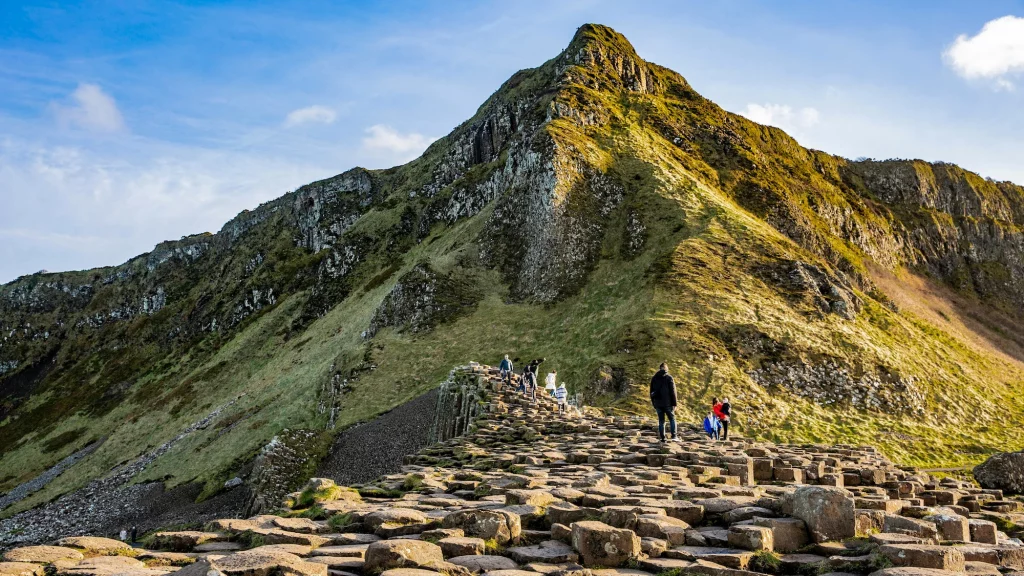
The most famous landmark on this route is the Giant’s Causeway. A geological wonder featuring 40,000 interlocking basalt columns which legend has were built by a Giant to reach his rival in Scotland. It is an understandably popular spot, so an early morning or late evening visit is recommended to avoid the crowds. You can take a park and ride Shuttle bus from Bushmills to avoid parking problems at the site.
While you are at Bushmills you could visit the world’s oldest licensed whiskey distillery. The Bushmills distillery has been making whiskey for more than 400 years and you can visit the distillery today for a tour and a tasting session (£40).
For walkers there are a host of options. The Gobbins cliff path is a guided walk (£23.50) that takes you on a walkway carves out of the cliffs, going through caves and tunnels and across bridges over deep inlets.
If, like me, you appreciate waterfalls then you can choose between the 40ft Cranny falls waterfall, surrounded by lush vegetation, or the Glenariff waterfall and Board wark in the Glenariff national forest. From there you can also take the scenic trail down the Invir River gorge which will reward you with views over the sea to the Mull of Kintyre in Scotland.
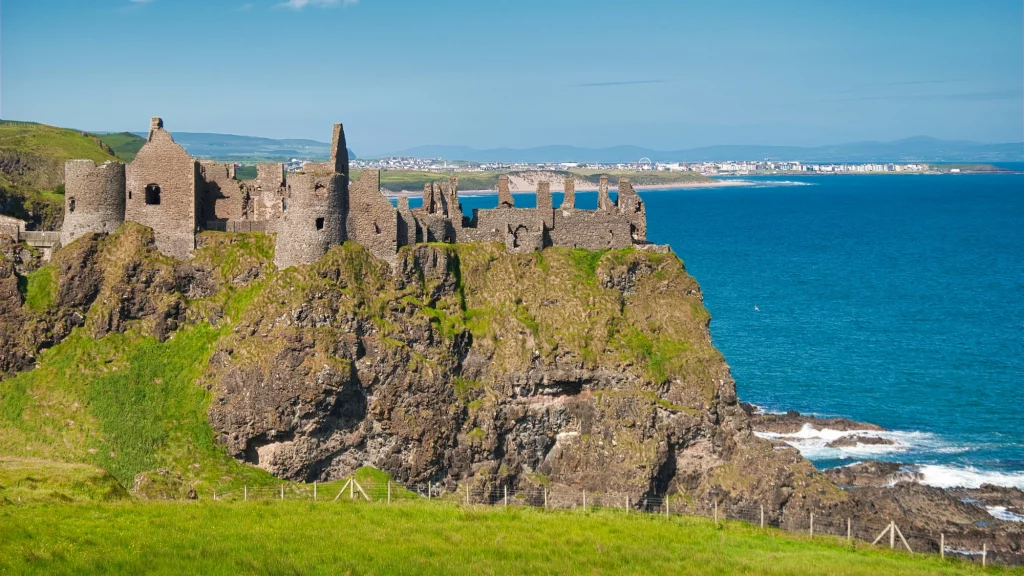
The Causeway Coastal route takes you to 2 of the most spectacular castle ruins in Ireland. Dunluce Castle, once the headquarters of the Mac Donnell clan, sits proud on a headland and has stunning views out to the sea. (visits cost £6). Kinbane Castle is more ruin than castle but is free to visit and has some of the best coastal views in the country. You can sometime spot seals basking on the rocks.
Not far from Kinbane Castle is the Carrick-a-rede coastal walk an rope bridge. The walk offers uninterrupted views of the north coast where you may be able to sea dolphins and basking sharks. The rope bridge, nicknamed the bridge across the ocean, crosses a 20-metre-wide chasm to the rocky island. At 100 ft above the Atlantic Ocean this is an exhilarating walk that might be the highlight of the road trip. (booking ahead is essential – £16)
Where to stay in County Antrim
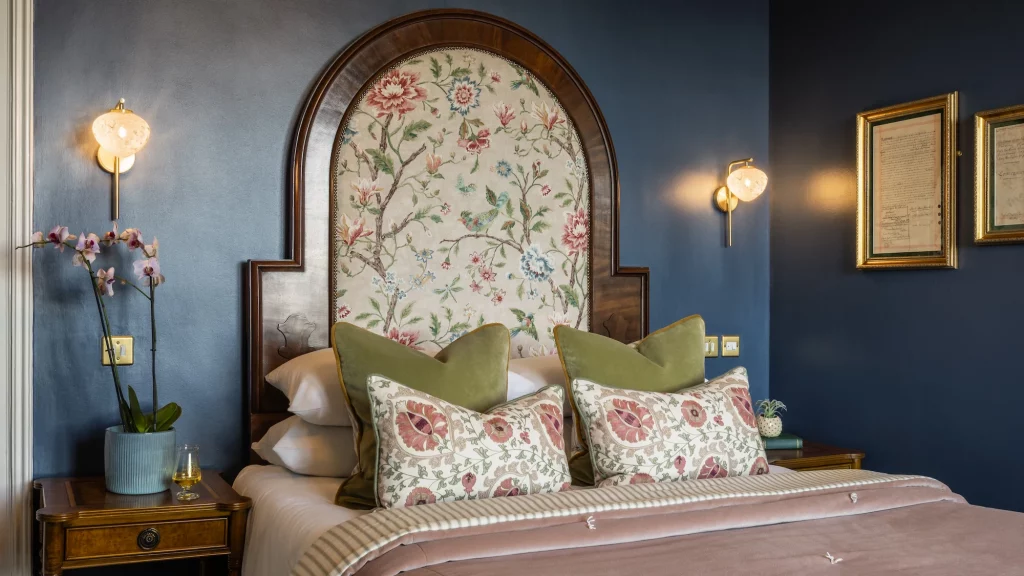
In the picturesque village of Carnlough, a Game of Thrones filming location, is Ireland’s first whiskey hotel. The Harbourview hotel is a 35-room hotel with a sense of grandeur. Formerly the Londonderry Arms hotel it re-opened under the new name in 2025 following a change of ownership and refurbishment. It has a collection of over 200 whiskeys and runs tasting sessions as well as a whiskey fuelled menu. Regular live music events make it a popular spot. The hotel was recently awarded the Sunday Times award for the best place to stay in Northern Ireland. Prices in August start from £129 for a double room.
Bad Gastein, Austria in August
At more than 1000m above sea level Bad Gastein rarely suffers from the extreme heat seen elsewhere in Europe in August. Built in a gorge, with a waterfall crashing down into the middle of the town, Bad Gastein is a place of contrasts. Made popular as a spa town in the latter half of the 19th Century by German Emperor Wilhelm I who made it his summer home, it became the place to be and be seen. The arrival of the railway secured its position, and the town became known as the Monte Carlo of the Alps. Large hotels were built in the Belle Epoque style. The local spa water, which comes out of the ground at 46C and is rich in Radon is said to have healing properties for arthritis and rheumatism, helped bring customers for wellness breaks, long before the term was invented.
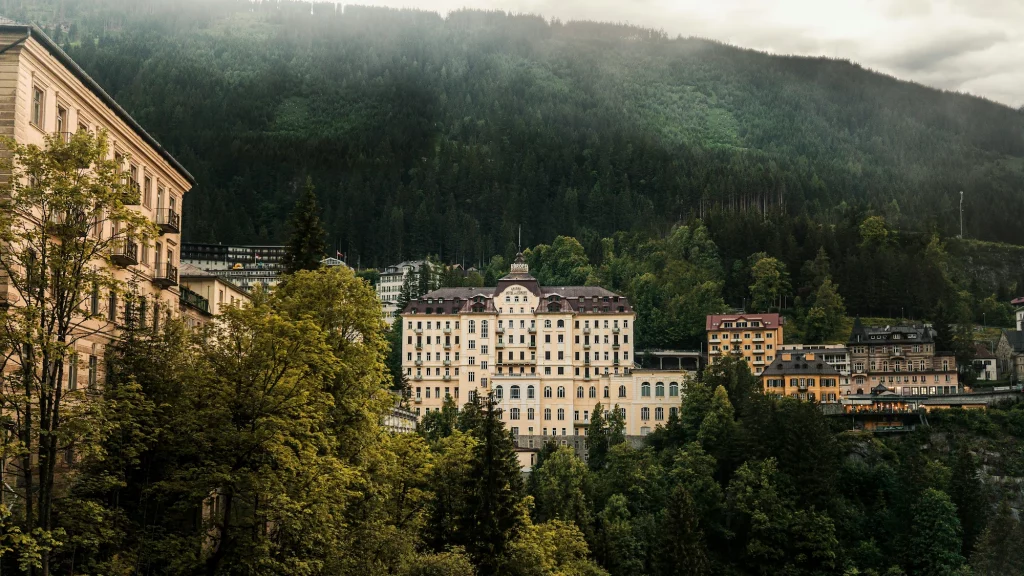
The town remained popular through WWII when high ranking nazi officers would come to Bad Gastein to enjoy the luxury hotels. Its popularity endured after the war, with various nicknames, such as pearl of the Alps and Diva of the Alps being bestown upon it.
The town lost its popularity in the 70s and by the 80s many of the big hotels shut down, leaving grand buildings crumbling and decaying for decades.
But the fashion for wellness holidays and summer breaks in the cooler mountain air are stimulating a revival of this once great town. Driven in part by the renovation of the Felsentherme spa complex, several design hotels have opened in the town, and a renaissance is in full swing.
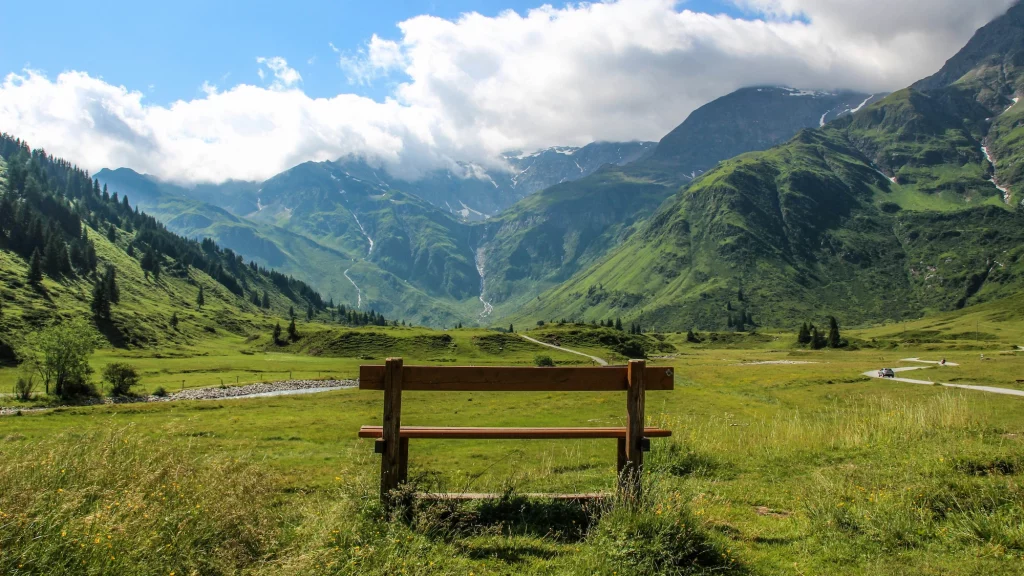
The new found popularity is unsurprising given Bad Gastein’s enviable Alpine position and easy accessibility by train from Salzburg (just 80 minutes away). As well as the waters and spas visitors can take the chair lift up to Graukogel, known for its beautiful and ancient larch Forest. Larch is said to lower the heart rate, so the Larch trail here adds to the wellness offerings in the town.
You can get higher into the mountains by taking the cable car up to Stubnerkogel, one of the most scenic peaks in the Gastein valley, where you can walk across the 140m long suspension bridge. At 2300 metres make sure you have a head for heights.
Where to stay in Bad Gastein
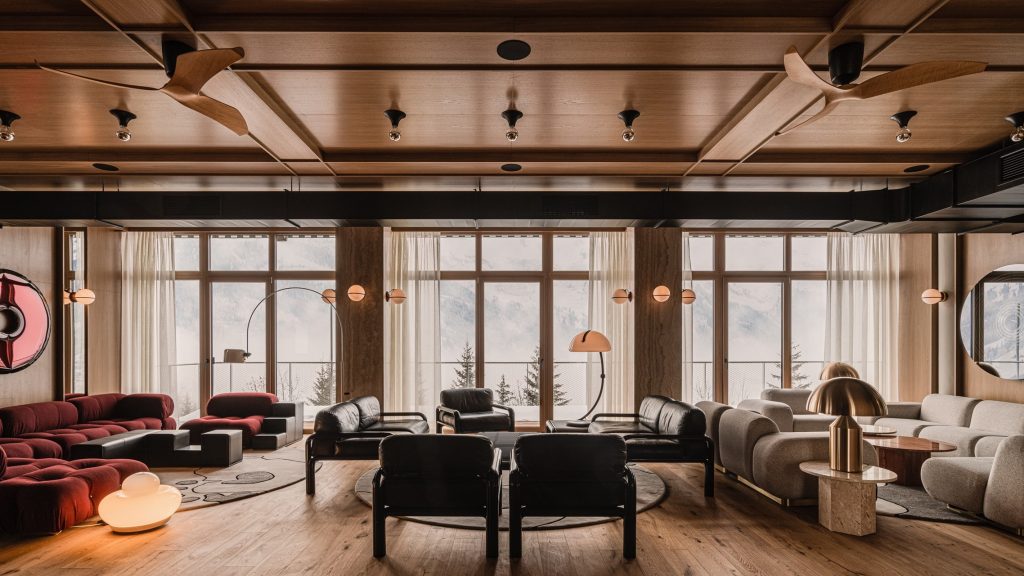
A number of newly renovated hotels have opened in the town, but only one has a Michelin Key. The Comodo is a contemporary hotel, repurposed from a former clinic and health resort. The mid-century modern interiors and custom-made sofas facing out to the alps are a long way from the traditional Austrian alpine style, but work well with the glamour that still clings to this town.
Berlin-based chef, Max Jensen, brings a modern farm to table concept to the restaurant. The spa has an indoor swimming pool and both wet and dry saunas and stunning views, which are shared with 55 of the 70 bedrooms. Double rooms cost from 259€ in August, and I suspect that as Bad Gastein retakes its place on the role call of places to be seen that price will rise significantly in the future.
Gdansk, Poland in August
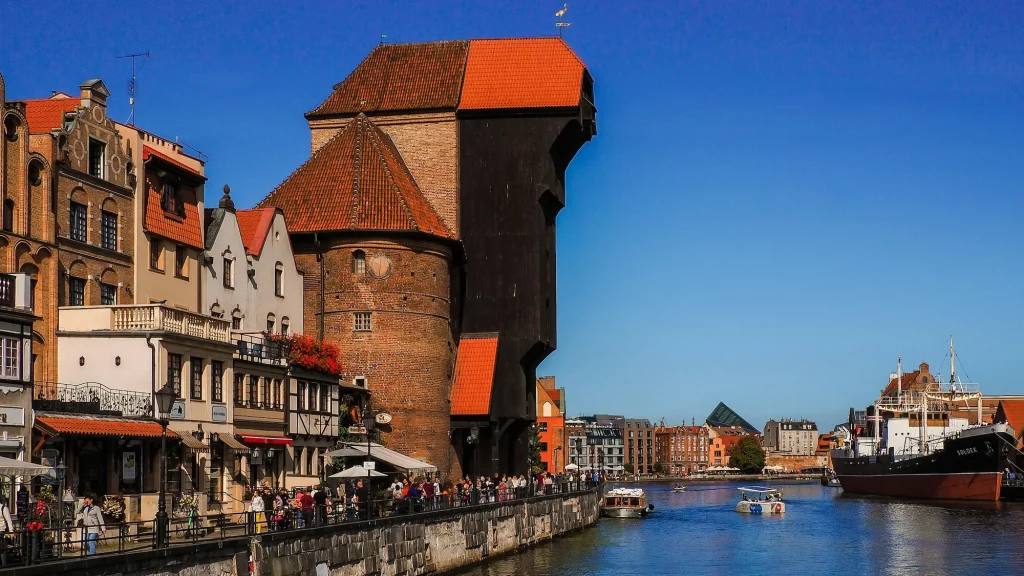
Saint Dominic’s fair is one of the biggest cultural and trade open-air events in Europe, along with Oktoberfest. For three weeks the city of Gdansk is transformed into an open-air festival. Food stalls, handicrafts and a funfair fill the streets and millions of people visit for the street parades, concerts, fireworks and sporting events.
This is not a modern festival. St Dominics fair has taken place in Gdansk since the canonisation of the saint in 1234. What started as prayers and entertainment, the event turned into an important trade event, with as many as 400 ships sailing into the port with furs, Czech glass and spices.
For 2026 the fair takes place between 25 July and 16 August. Forbes ranked the fair in the top ten summer events in Europe.
Gdansk can be a surprise to visitors. It has a feel of Copenhagen or Amsterdam about it, with its beautiful gabled merchant houses along the water and the colourful townhouses along the Royal Route, the main pedestrian street. Climbing the town hall tower will give you a great panoramic view of the city.
There are several interesting museums, perhaps the most notable being the Museum of WWII, as Gdansk was where the first shots were fired. The museum covers not only the war itself, but also the lead up to the war, and the long-lasting consequences after the war ended. At over 6,000 m² the main exhibition is one of the largest museum exhibitions in the world.
Gdansk is an affordable city break in Europe with prices significantly lower than other big cities. Note that Poland does not use the Euro, the official currency is the Polish Zloty.
Where to stay in Gdansk
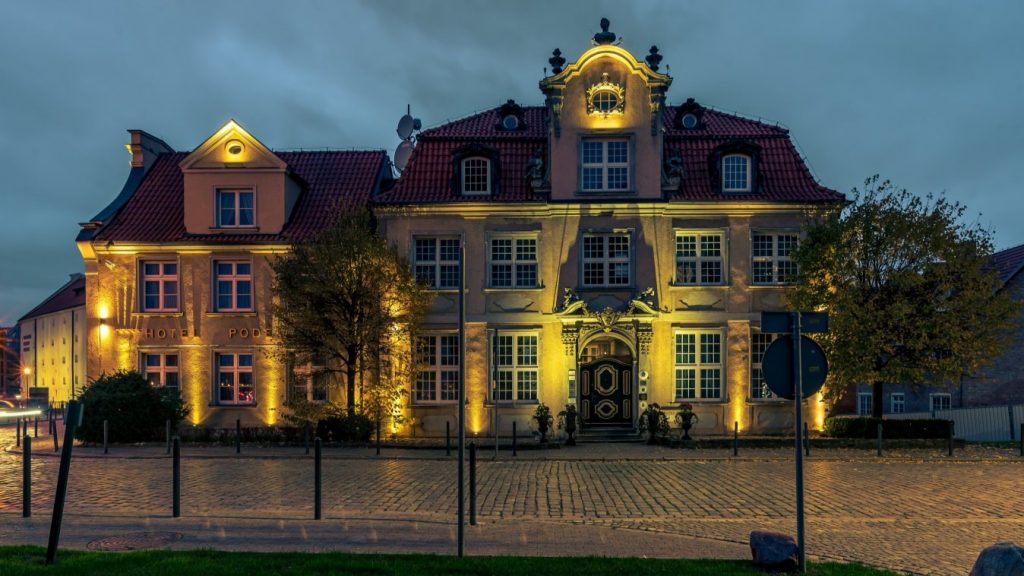
Sitting directly on the River Motława overlooking the Marina, the Hotel Podewils offers old world charm in a truly historic building. It is conveniently place for exploring the main city of Gdansk on foot. Rooms tend towards traditional chintz rather than beige modernity. Prices in August start at 712 PLN (165€ )
Best places to go in August in Europe
In a month where every beach in Europe is packed, and with rising summer temperature, I believe the best places to go in Europe in August are further north and away from the popular beach resorts. A road trip in Northern Ireland, a spa town in Austria or a city break in Poland will all offer a different view of Europe from that normally associated with a Euro-summer.
If you are planning your first trip to Europe then make sure your read How to plan a trip to Europe: the 3 essential first steps

If you need help with planning your trip then check out our services

If you have any questions about travel itineraries in Europe then drop us a line.  We are happy to help.

If you want more tips and ideas for visiting Europe then FOLLOW ME ON INSTAGRAM